
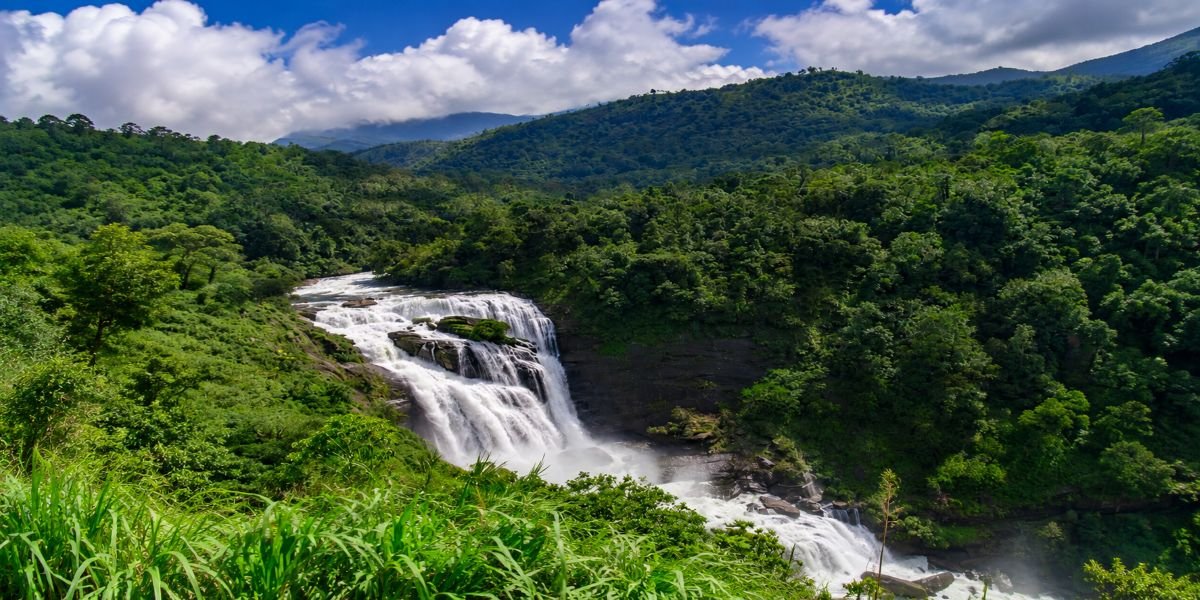
July in Coorg is not for everyone. But for the right traveler, it is one of the most rewarding months to visit this Western Ghats hill region. The coffee estates drip with rain. Waterfalls thunder at full force. The entire Kodagu district turns into a living, breathing carpet of green that photographs cannot fully capture. Crowds thin out, tariffs drop, and the pace of life slows to something you forgot existed.
This guide covers everything you need to know before planning a July trip to Coorg — the weather data, practical road conditions, what is open and what is closed, the best things to do when it rains, what to pack, where to stay, how to plan your days, and the honest trade-offs you should weigh before booking.
If you are asking, “is July a good time to visit Coorg?” — the short answer is yes, with conditions. Read on for the full picture.
Understanding Coorg’s July Weather
Coorg sits at an elevation of roughly 1,150 to 1,450 metres above sea level in the Kodagu district of Karnataka. Unlike the scorching plains of Bangalore or Mysore, the region stays cool year-round due to its altitude and dense forest cover. But July is when the southwest monsoon reaches peak intensity across the Western Ghats, and Coorg catches the full force of it.
Temperature in July
Daytime temperatures in Coorg during July typically hover between 19°C and 24°C. Nights can drop to 14°C, and in the higher elevations around Talacauvery or Brahmagiri, nighttime lows occasionally touch 10–12°C during sustained rainfall spells.
This is considerably cooler than most of South India in July, where daytime temperatures regularly cross 30°C. For travelers escaping the muggy heat of Bangalore, Chennai, or Hyderabad, the temperature difference alone makes the trip worthwhile.
Rainfall Patterns
July is one of the wettest months in Coorg. Madikeri, the district headquarters, receives an average of approximately 632 mm of rainfall in July alone — more than many Indian cities receive in an entire year. The average annual rainfall across Kodagu district ranges between 2,500 and 3,500 mm, and roughly 70–80% of that falls between June and September.
Rain in July is not constant, though. There is a pattern most visitors can work around. Mornings often begin overcast but dry. Showers typically pick up by late morning or early afternoon, sometimes intensifying into heavy downpours that last one to three hours. Evenings may clear partially, offering dramatic cloud formations and occasional golden-hour light through breaks in the overcast sky.
Some days will be relentlessly wet from dawn to dusk. Others will surprise you with extended dry spells. Flexibility is essential.
Humidity
Relative humidity in July averages around 90–95% throughout the day. Everything feels damp — clothes, towels, shoes, camera bags. This is not a deal-breaker, but you should plan for it. Quick-dry fabrics, waterproof storage, and a well-ventilated room matter more in July than in any other month.
July Weather Summary
| Parameter | Typical Range in July |
|---|---|
| Daytime temperature | 19°C – 24°C |
| Nighttime temperature | 12°C – 17°C |
| Monthly rainfall (Madikeri) | ~600–650 mm |
| Rainy days per month | 25–29 out of 31 |
| Relative humidity | 90–95% |
| Daylight hours | ~10.5–11 hours |
| Wind | Light to moderate (15–25 km/h) |
| UV index | Low to moderate (cloud cover) |
The Honest Case For and Against Visiting Coorg in July
Before booking, understand the real trade-offs. July is not a compromise month — it is a fundamentally different experience from visiting Coorg in October or March.
Why July Works
The scenery is at its absolute peak. Every shade of green you have ever seen exists simultaneously across Coorg’s hills in July. Waterfalls that are thin trickles in March become roaring cascades. The mist rolls through coffee plantations like something out of a film. Paddy fields glow. Streams appear where none existed a month ago.
Crowds are at their lowest. Most domestic tourists avoid monsoon destinations. This means shorter queues at viewpoints, emptier restaurants, and a general sense of peace that peak-season Coorg simply cannot offer.
Tariffs drop significantly. Hotels and resorts that charge premium rates from October to May often reduce prices by 20–40% during monsoon months. This is the best value window for staying at places you might not otherwise afford.
The air quality is exceptional. Post-rain air in Coorg is extraordinarily clean. The combination of high altitude, dense vegetation, and washed-out particulates creates a freshness that city residents find almost intoxicating.
Coffee estates look their best. The monsoon rains feed Coorg’s famous arabica and robusta coffee plantations. Walking through a rain-drenched estate — leaves glistening, earth smelling of petrichor — is a sensory experience that dry-season visits simply cannot replicate.
Why July Might Not Work For You
Outdoor sightseeing is weather-dependent. You cannot build a tight itinerary and expect to stick to it. Viewpoints like Mandalpatti are often closed or completely fog-covered. Plans change daily based on rainfall intensity.
Nagarhole National Park is closed. The park typically shuts from June or July through September for the monsoon. If a wildlife safari is a priority, July eliminates this option.
Some trekking trails become unsafe. Trails to Brahmagiri, Pushpagiri, and Tadiandamol may be slippery, leech-infested, or officially closed during heavy rainfall weeks. Casual trekkers should avoid monsoon treks unless accompanied by experienced local guides.
Road conditions require caution. The main highways to Coorg remain serviceable, but ghat sections can have reduced visibility, occasional rockfalls, and waterlogged stretches. Night driving is not recommended during monsoon.
Leeches are a reality. Any walk through wet plantation trails or forested areas in July will involve leeches. They are harmless but unpleasant for many travelers, especially those with children.
Getting to Coorg in July — Road Conditions and Transport
From Bangalore (260–280 km)
The most popular route follows NH275 through Ramanagara, Mandya, Mysore, and then continues via Hunsur or Kushalnagar into Coorg. Total driving time is 5.5 to 7 hours in dry conditions, and 6.5 to 8 hours during monsoon due to slower speeds on wet roads and occasional traffic at ghat sections.
The highway from Bangalore to Mysore is a well-maintained expressway and poses no monsoon-specific risks. The stretch from Mysore to Kushalnagar via Hunsur is a two-lane road through forest patches — manageable but demanding in rain, with reduced visibility and occasional truck traffic.
July-specific advice: Start early from Bangalore (before 6 AM) to reach Coorg before afternoon downpours intensify. Use the Mysore ring road to avoid city traffic. Carry a charged phone with offline maps — network coverage drops in the ghat sections.
From Mysore (120 km)
The shortest route takes about 3 hours. The road through Hunsur and into Kushalnagar is the most commonly used and remains in reasonable condition during monsoon. Avoid the Madikeri–Mangalore ghat road unless you are an experienced mountain driver.
From Mangalore (135 km)
This route climbs through the Sampaje Ghat, which is the section most prone to landslides during heavy monsoon spells. Multiple landslide incidents have been reported on this stretch in previous years, including significant disruptions in 2018 and 2019. Check local advisories and Karnataka State Disaster Management Authority (KSDMA) updates before attempting this route in July.
Road Condition Summary
| Route | Distance | Monsoon Drive Time | Risk Level |
|---|---|---|---|
| Bangalore → Coorg (via Mysore) | 260–280 km | 6.5–8 hours | Low–Moderate |
| Mysore → Coorg (via Hunsur) | 120 km | 2.5–3.5 hours | Low–Moderate |
| Mangalore → Coorg (Sampaje Ghat) | 135 km | 3.5–5 hours | Moderate–High |
| Kannur (Kerala) → Coorg | 115 km | 3–4 hours | Moderate |
Self-Drive vs Hiring a Driver
If you are comfortable driving on wet mountain roads with hairpin curves and limited visibility, self-drive is workable on the Bangalore–Mysore–Coorg route. For the Mangalore ghat section or for travelers unfamiliar with Indian mountain roads, hiring an experienced local driver is a safer and more relaxed choice. Your resort or hotel can usually arrange this.
What to Do in Coorg in July
July limits some activities and enhances others. Plan around what the season offers rather than fighting it.
Waterfalls at Their Most Spectacular
This is the number one reason to visit Coorg in July. Every waterfall in the region surges with monsoon water, creating the kind of power and spray that dry-season visitors never see.
Abbey Falls (Madikeri): Coorg’s most popular waterfall is at peak volume in July. The designated viewing platform remains accessible, though the trail can be slippery. Arrive early for fewer visitors and better light.
Iruppu Falls (Brahmagiri Range): A stunning cascade near the Brahmagiri Wildlife Sanctuary. The falls are genuinely magnificent in July — the volume of water is enormous. The steps down to the falls are steep and wet, so waterproof footwear with strong grip is essential.
Mallalli Falls (Somwarpet): One of Karnataka’s tallest waterfalls, located near Pushpagiri Wildlife Sanctuary. The descent involves roughly 350 steps — slippery in monsoon but worth the effort if conditions allow. Check locally before visiting, as access may be restricted during extreme rainfall.
Chelavara Falls and Kote Abbi Falls: Smaller but beautiful monsoon waterfalls that see fewer tourists than Abbey or Iruppu. Ask locals for current access conditions.
Coffee Plantation Walks
Coorg produces some of India’s finest arabica and robusta coffee, and the monsoon months are when the plantations look their most vibrant. Many estates and plantation-stay properties offer guided walks where you can learn about coffee cultivation, shade-growing techniques, and the processing cycle from cherry to cup.
Rain adds atmosphere to these walks — the wet earth, the sound of water dripping through canopy layers, the rich green of coffee leaves catching whatever light breaks through the clouds. A good plantation walk in July is a multi-sensory experience.
Properties like INIKA Resorts in Virajpet sit within working coffee plantations, allowing guests to step directly from their cottage into the estate without needing to drive anywhere. During monsoon, this kind of on-property access becomes especially valuable — you can time your walks around rain breaks without worrying about road conditions.
Viewpoints (With Realistic Expectations)
Raja’s Seat (Madikeri): This well-known sunset viewpoint becomes a mist-watching spot in July. You will rarely get clear panoramic views, but the experience of sitting above clouds as they roll through the valley has its own appeal. Most enjoyable in early morning when fog lifts briefly.
Mandalpatti: The jeep ride to this hilltop viewpoint is often suspended during heavy monsoon weeks due to slippery off-road conditions. When accessible, the view can be either breathtaking (clouds below you, surrounding peaks visible) or completely obscured by fog. It is a gamble in July — rewarding when it pays off, but do not plan your trip around it.
Talacauvery: The origin of the Cauvery River sits at roughly 1,276 metres and receives intense rainfall in July. The drive involves ghat roads that need extra caution during monsoon. The site itself is peaceful and uncrowded in the rains.
Indoor and Sheltered Experiences
When the rain intensifies, Coorg still has things to offer.
Madikeri Fort: A compact historical fort in the town centre. Easy to explore in light rain and provides some shelter during downpours. The small museum inside is worth a quick visit.
Bylakuppe Tibetan Settlement: One of the largest Tibetan settlements outside Tibet, located near Kushalnagar. The Namdroling Monastery (Golden Temple) is indoors and visually stunning — golden Buddha statues, intricate Tibetan artwork, and a peaceful atmosphere. This is a reliable all-weather activity.
Spice plantation visits: Many spice estates near Madikeri and Virajpet offer guided tours of pepper, cardamom, vanilla, and nutmeg cultivation. These work well in monsoon because the spice vines and plants thrive in wet conditions, and most tours include covered processing areas.
Local food experiences: Kodagu cuisine deserves dedicated attention. Try pandi curry (pork curry cooked with kachampuli vinegar), akki rotti (rice flatbread), kadambuttu (steamed rice balls), bamboo shoot curry, and field mushroom preparations that appear only during monsoon. Many homestays and resorts serve these regional dishes, and some arrange cooking demonstrations.
River Activities
Barapole River Rafting: July is peak season for white-water rafting on the Barapole River near Kushalnagar. The monsoon swells the river to its most exciting state, with Class II–IV rapids depending on water levels. Several licensed operators run half-day trips. This is one activity that genuinely improves in monsoon.
Dubare Elephant Camp: Located on the banks of the Cauvery River near Kushalnagar. The elephant interaction experiences (bathing and feeding) may be suspended during heavy river flow. Check availability on the day of your visit rather than relying on advance bookings.
Wildlife and Birding
While Nagarhole National Park is typically closed from July through September, Coorg itself is rich in birdlife. Over 300 bird species are found across the Kodagu region, and monsoon is an active breeding season for many.
The Brahmagiri Wildlife Sanctuary remains accessible for limited visits, and the forests around Virajpet and Somwarpet support populations of Malabar grey hornbills, Malabar trogons, Asian fairy-bluebirds, Indian pittas, and various kingfisher species. For serious birders, early morning walks through plantation corridors can be remarkably productive in July.
Photography
July transforms Coorg into a photographer’s playground — with caveats. The light is soft and diffused, perfect for landscapes, macro work on rain-drenched leaves and flowers, and moody atmospheric shots. Waterfalls photograph beautifully with the volume of monsoon flow. Mist and cloud formations create dramatic backdrops.
The challenge is protecting your equipment. A good rain cover for your camera, a reliable dry bag, and silica gel packets in your camera bag are non-negotiable. Shoot during rain breaks rather than in active downpours. The hour after a heavy spell often produces the most dramatic light.
Where to Stay in July — Choosing the Right Base
Your accommodation choice matters more in monsoon than in any other season. A well-located property with covered common areas, reliable power backup, good food, and on-site activities can make rainy days feel luxurious rather than frustrating.
What to Prioritise
Plantation or estate settings work better than town hotels during monsoon. You want greenery outside your window, walking paths you can use during rain breaks, and an atmosphere that feels connected to the landscape rather than isolated from it.
Covered outdoor spaces — verandahs, sit-outs, gazebos — become essential. Spending an afternoon reading on a covered balcony while rain hammers the coffee bushes around you is one of the great pleasures of monsoon Coorg.
Reliable power backup and Wi-Fi matter because monsoon storms occasionally cause brief power interruptions. Properties with inverter or generator backup handle this seamlessly.
Good on-site dining reduces the need to drive to restaurants in the rain. A resort that serves quality Kodagu cuisine, South Indian meals, and continental options means you can stay comfortable without worrying about logistics.
Virajpet as a Base
Virajpet (also spelled Virarajendrapete) is located in South Coorg, roughly 30 km from Madikeri. It is quieter and less commercialised than the Madikeri area, surrounded by coffee and spice plantations, and offers convenient access to attractions in both South and Central Coorg.
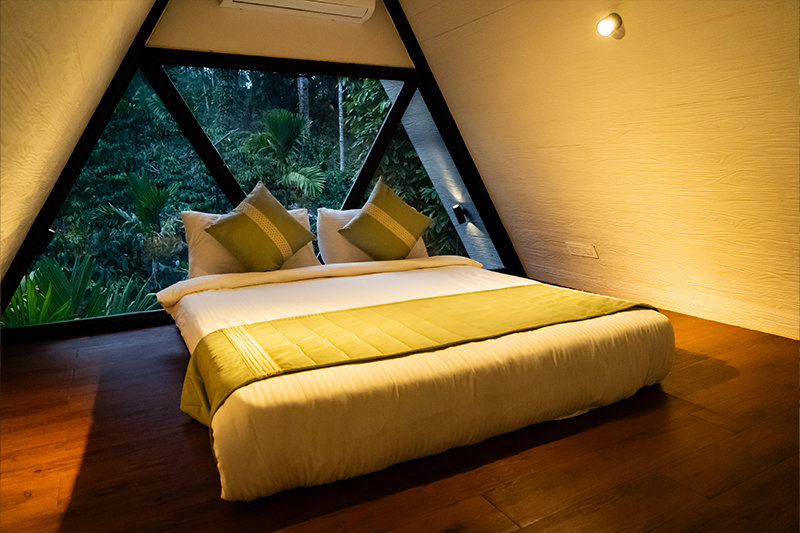
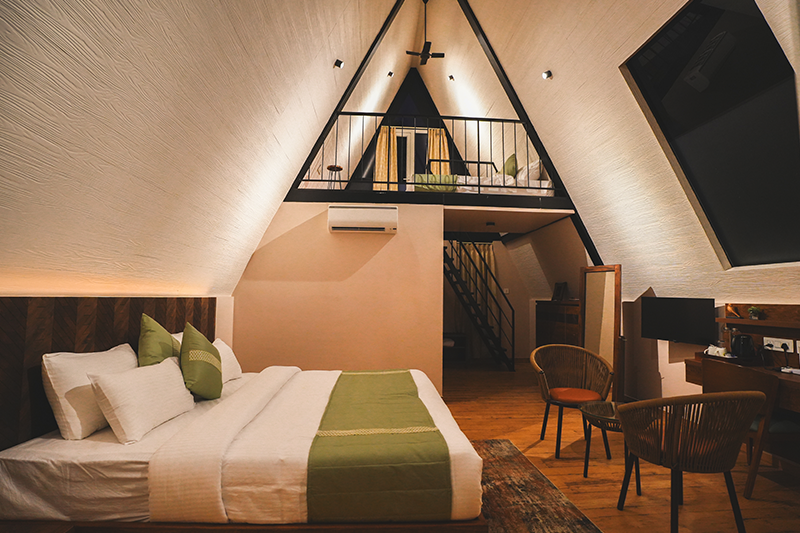
INIKA Resorts, a luxury coffee plantation property in Virajpet, is particularly well-suited for monsoon visits. The resort sits within a working estate, so guests can walk through the plantation during dry windows without getting in a car. The private cottages have large windows and balconies facing coffee estates and hills — designed for exactly the kind of slow, rain-watching mornings that define a good monsoon stay. The infinity pool, sheltered dining area, and indoor games provide all-weather comfort, while the Virajpet location keeps you within easy reach of Iruppu Falls, Nagarhole’s periphery, Bylakuppe, and the Brahmagiri range.
For families, the spacious cottages, safe grounds for children to explore during dry spells, and attentive staff who can accommodate flexible meal timings make monsoon stays manageable even with young kids. For couples, the privacy of plantation-set cottages, the sound of rain on coffee canopy, and the general absence of crowds create an atmosphere that many honeymooners specifically seek.
Practical July Packing Checklist
Packing for monsoon Coorg is different from packing for a regular hill-station trip. Get this right and your comfort level improves dramatically.
| Category | What to Pack | Why It Matters |
|---|---|---|
| Rain protection | Lightweight waterproof jacket (not just an umbrella) | Wind makes umbrellas unreliable; a jacket keeps hands free on trails |
| Footwear | Waterproof trekking shoes or sports sandals with grip | Cotton shoes and regular sneakers stay wet for days |
| Spare footwear | A second pair of sandals or shoes | One pair will always be drying |
| Clothing | Quick-dry t-shirts, convertible trousers, light layers | Cotton takes forever to dry in 95% humidity |
| Warm layer | A light fleece or hoodie | Evenings drop to 14–17°C; feels colder when damp |
| Waterproof bag | Dry bag or ziplock bags for electronics | Phones, cameras, and power banks need protection from moisture |
| Insect protection | Insect repellent, leech-resistant socks | Leeches are common on wet trails |
| Leech kit | Salt or tobacco (local remedy) | Leeches detach when salt is applied |
| Medical | Basic first-aid, anti-histamines, electrolytes | Insect bites and humidity-related discomfort are common |
| Power | Power bank (10,000 mAh+) | Brief power interruptions happen during storms |
| Photography | Camera rain cover, silica gel packets, dry bag | Humidity and rain damage electronics quickly |
| Personal | Moisturiser, lip balm, small towel | Constant dampness dries skin out paradoxically |
Suggested Itineraries for July
These itineraries assume you are staying in the Virajpet area (such as INIKA Resorts) and factor in monsoon weather buffers. Treat them as frameworks, not rigid schedules — be prepared to swap activities based on rainfall.
2-Day Monsoon Escape (Weekend Trip)
Day 1
- Arrive by midday from Bangalore or Mysore
- Check in, lunch at your resort
- Afternoon: guided coffee plantation walk during a rain break
- Evening: settle into your cottage, enjoy the rain from a covered balcony, bonfire if weather permits
Day 2
- Early morning: birdwatching walk around the estate (6:30–8:00 AM, often the driest window)
- Mid-morning: drive to Abbey Falls or Iruppu Falls (choose one based on weather reports)
- Afternoon: Bylakuppe Tibetan Monastery if returning via Kushalnagar
- Late afternoon: depart for Bangalore/Mysore, or extend your stay
3-Day Immersive Stay
Day 1
- Arrive and check in at a plantation property
- Explore the resort grounds, infinity pool, indoor games
- Late afternoon: short plantation walk
- Evening: Kodagu cuisine dinner, early night
Day 2
- Morning: spice plantation tour near Virajpet or Madikeri
- Late morning: Abbey Falls visit (arrive before noon for best conditions)
- Afternoon: Madikeri Fort and town walk, pick up local coffee and spices
- Evening: Raja’s Seat for mist-watching (beautiful even without clear views)
- Return to resort for dinner
Day 3
- Early morning: birdwatching or yoga session
- Mid-morning: drive to Iruppu Falls (approximately 50 km from Virajpet)
- Afternoon: Barapole River rafting (if water levels permit and operators are running)
- Late afternoon: begin return journey or spend a final evening at the resort
4-Day Slow Monsoon Retreat
Add a full “rain day” to the 3-day plan — a day with no scheduled activities where you read, sleep in, swim (rain or shine — the pool is refreshing in monsoon), enjoy long meals, and let the rhythm of the rain set the pace. Many travelers report that their best monsoon memories come from these unplanned hours, not from ticking off attraction lists.
On the fourth day, consider exploring Nisargadhama Island near Kushalnagar, visiting the Harangi Dam backwaters, or taking a scenic drive through Somwarpet’s rice paddies, which are luminously green in July.
Distances from Virajpet to Key Attractions
| Attraction | Distance from Virajpet | Approx. Drive Time (Monsoon) |
|---|---|---|
| Abbey Falls, Madikeri | 35 km | 50–70 minutes |
| Raja’s Seat, Madikeri | 32 km | 45–65 minutes |
| Madikeri Fort | 32 km | 45–60 minutes |
| Iruppu Falls | 48 km | 70–90 minutes |
| Talacauvery | 50 km | 80–100 minutes |
| Bylakuppe (Golden Temple) | 60 km | 75–90 minutes |
| Dubare Elephant Camp | 55 km | 70–90 minutes |
| Nisargadhama, Kushalnagar | 52 km | 65–85 minutes |
| Barapole River (Rafting) | 50 km | 65–80 minutes |
| Nagarhole National Park (Kutta gate) | 55 km | 70–90 minutes (closed July–Sep) |
| Mandalpatti Viewpoint | 40 km + off-road | Variable (often closed in July) |
| Mallalli Falls | 65 km | 90–110 minutes |
Drive times are approximate and increase during heavy rainfall due to reduced speeds.
Food and Drink in Monsoon Coorg
Monsoon is arguably the best season for food in Coorg. Several ingredients appear only during the rains, and the cool weather makes rich, warming dishes especially satisfying.
Pandi Curry: The signature Kodava pork dish, slow-cooked with kachampuli (a local vinegar made from a Garcinia fruit). The flavour is deeply sour, savoury, and slightly smoky. Available at most homestays and resorts serving local cuisine.
Akki Rotti: A crispy rice flatbread often served with chutney or curry. Simple, satisfying, and perfect as a rainy-day breakfast or snack.
Kadambuttu: Steamed rice dumplings, typically paired with pandi curry or chicken curry. The texture is soft and slightly chewy — a comfort food that suits the monsoon mood.
Bamboo Shoot Curry: A seasonal specialty that uses fresh bamboo shoots harvested during monsoon. The flavour is earthy and slightly tart.
Wild Mushrooms: Monsoon brings various edible wild mushroom species that locals forage and cook in curries or dry-fry preparations. These are rare treats available only in the rainy months at select homestays and local restaurants.
Coorg Coffee: The region’s arabica and robusta beans are exceptional. Most plantation stays serve fresh estate-grown coffee that tastes nothing like what you buy in city supermarkets. A hot cup of estate coffee on a rainy Coorg morning is a small but genuine luxury.
Family Travel in July — Is It Practical?
Traveling to Coorg with children during monsoon is practical if you choose the right accommodation and adjust your expectations. Large resorts and plantation stays with covered play areas, pools, and spacious grounds work far better than small homestays or town hotels where rainy days leave children restless.
Age-appropriate activities that work in July:
- Plantation walks (older children who can handle wet trails)
- Pool time (most resort pools are usable in light rain)
- Bylakuppe Monastery visit (indoor, visually interesting for children)
- Abbey Falls viewing platform (manageable for children above age 5)
- Indoor games, bonfire evenings, stargazing during clear spells
- Simple cooking experiences with resort staff (some properties arrange this)
What to skip with young children:
- Long treks on slippery monsoon trails
- Mandalpatti jeep ride (rough off-road, especially in rain)
- Any activity requiring tight scheduling that rain can disrupt
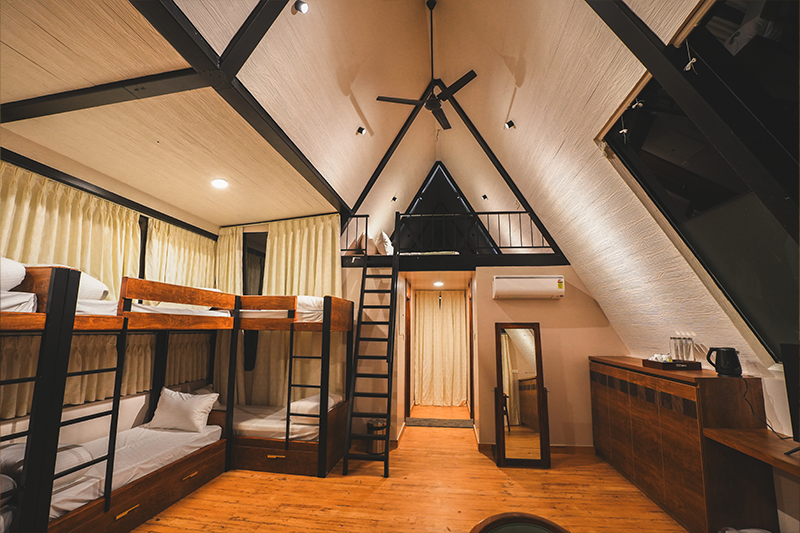
INIKA Resorts works well for families in monsoon partly because of its grounds — children can explore the plantation paths during dry windows in a safe environment — and partly because the cottages are spacious enough that a rainy afternoon indoors does not feel claustrophobic. The multi-bedroom row house cottages are particularly suited for families who need separate sleeping spaces for children and adults.
Honeymoon and Couples Travel in July
July is, counter-intuitively, one of the most romantic months to visit Coorg. The rain creates a natural cocoon effect — the world shrinks to your cottage, the sound of rainfall, a warm drink, and the person beside you.
Why couples choose monsoon Coorg:
- Far fewer tourists at every attraction
- Lower tariffs mean upgrades to better cottages become affordable
- The landscape is at its most dramatic and photogenic
- The pace naturally slows, leaving space for conversation and connection
- Rain creates excuses to stay in — which is often what couples actually want on a getaway
What works for couples in July:
- Private cottage stays on a coffee plantation with balcony views
- Sunset (or mist-set) at Raja’s Seat with a hot beverage
- Waterfall visits in the morning before crowds arrive
- Long meals with Kodagu cuisine and estate coffee
- Pool time between rain spells
- Stargazing on clear evenings (when they appear, they are spectacular)
A property like INIKA Resorts designs its cottages and common areas with couples in mind — floor-to-ceiling windows facing plantation views, private balconies, an infinity pool positioned for scenic impact, and the option to arrange quiet private dining. In monsoon, these features become the trip rather than supplements to sightseeing.
Responsible Tourism During Monsoon
Monsoon travel in a fragile hill ecosystem carries environmental responsibility. A few practices that matter:
Stay on marked trails. Wet soil erodes easily when trampled. Avoid creating new paths through plantations or forests, even during short walks.
Do not litter at waterfalls. Plastic waste at Coorg’s waterfalls is an ongoing problem. Carry your trash out, and consider picking up what others leave behind.
Respect wildlife encounters. Monsoon activates movement among snakes, frogs, insects, and small mammals. Do not disturb, kill, or relocate wildlife you encounter on trails or around your accommodation. Coorg’s biodiversity is part of what makes it special.
Support local food. Eating at locally owned restaurants and homestays rather than chain outlets keeps tourism revenue in the community. Ask for seasonal monsoon dishes — it encourages kitchens to maintain traditional recipes.
Reduce water waste. Even during monsoon, treated water for bathing and drinking requires energy and infrastructure. Being mindful of consumption is good practice anywhere.
Nearby Destinations to Combine With a July Coorg Trip
If you have extra days, these destinations pair naturally with Coorg and are accessible even during monsoon.
| Destination | Distance from Coorg | Why Visit in July |
|---|---|---|
| Mysore | 120 km from Madikeri | Palace, market, and city attractions — all-weather options |
| Wayanad (Kerala) | 75 km from Virajpet | Monsoon greenery rivals Coorg; waterfalls in full flow |
| Kabini (Nagarhole periphery) | 80 km from Madikeri | Backwater areas may be accessible even when park safaris close |
| Mangalore | 135 km (via ghat road) | Coastal cuisine, temples, Panambur Beach — only if ghat road is clear |
| Bylakuppe | 35 km from Kushalnagar | Tibetan settlement, Golden Temple — easy half-day addition |
Frequently Asked Questions
Is July a good time to visit Coorg? Yes, if you enjoy monsoon landscapes, cooler temperatures, fewer crowds, and lower hotel prices. July offers Coorg at its greenest and most dramatic. It is not ideal if you need guaranteed clear skies, tight outdoor itineraries, or wildlife safaris at Nagarhole.
How much does it rain in Coorg in July? Madikeri receives approximately 600–650 mm of rainfall during July, with 25–29 rainy days. Rain is not continuous — mornings are often partly dry, with heavier showers in the afternoon and evening.
What is the temperature in Coorg during July? Daytime temperatures range from 19°C to 24°C. Nighttime lows can drop to 12–17°C. It feels cool and comfortable compared to most of South India.
Are roads to Coorg safe during monsoon? The Bangalore–Mysore–Coorg route (NH275 and connecting roads) is generally safe with standard monsoon caution. The Mangalore–Coorg route via Sampaje Ghat carries higher landslide risk and requires checking local advisories.
Is Nagarhole National Park open in July? Typically no. Nagarhole closes for monsoon from around July through September. Safaris resume in October.
Can I visit Abbey Falls in July? Yes. Abbey Falls is accessible in July and at peak flow. The viewing platform is open, though the trail may be slippery. Waterproof footwear is recommended.
Is Mandalpatti accessible in July? Often no. The off-road jeep track to Mandalpatti becomes muddy and unsafe during heavy monsoon weeks. Check locally on the morning of your planned visit.
Are there leeches in Coorg in July? Yes. Leeches are common on forest and plantation trails during monsoon. Wearing leech-resistant socks and carrying salt helps. They are harmless but uncomfortable.
Is Coorg safe from landslides in July? Main roads and established tourist areas are generally safe. Landslide risks increase on steep ghat roads (especially the Madikeri–Mangalore route) during heavy rainfall spells. Avoid these stretches during red alert weather warnings.
What should I pack for Coorg in July? A waterproof jacket, quick-dry clothes, two pairs of waterproof footwear, a warm fleece layer, insect repellent, dry bags for electronics, a power bank, basic medications, and salt for leeches.
Is July good for a honeymoon in Coorg? July is excellent for honeymoons if you enjoy rain, privacy, and slow-paced stays. The crowds are minimal, plantation stays feel intimate, and lower tariffs allow upgrades to premium cottages.
Can I take children to Coorg in July? Yes, with appropriate preparation. Choose a resort with covered areas, a pool, and spacious grounds. Avoid long treks with young children. Waterfalls and the Bylakuppe Monastery are family-friendly all-weather options.
Is river rafting available in July? Yes. July is peak season for Barapole River rafting. Water levels are high and rapids are at their most exciting. Several licensed operators run trips during monsoon.
What food should I try in Coorg during monsoon? Pandi curry, kadambuttu, akki rotti, bamboo shoot curry, wild mushroom preparations, and fresh estate-grown coffee. Monsoon-specific ingredients make this season special for food.
How many days should I spend in Coorg in July? Three to four days is ideal. Two days feel rushed once weather flexibility is factored in. This gives you enough time to enjoy the landscape, visit one or two waterfalls, explore a plantation, and have unhurried resort time.
Is it worth visiting Coorg during monsoon or should I wait? If you enjoy dramatic landscapes, cooler weather, fewer tourists, and the sensory experience of rain in the hills, monsoon Coorg is deeply rewarding. If you prioritise clear skies, guaranteed outdoor access, and wildlife safaris, wait for October through March.
Can I drive from Bangalore to Coorg in July? Yes. The route is drivable in monsoon. Budget extra time (6.5–8 hours versus the usual 5.5–6.5 hours), avoid night driving, and check weather advisories before departing.
Do hotels in Coorg offer monsoon discounts? Most resorts and homestays offer 15–40% lower rates during monsoon season (June–September). This is the best-value window for premium stays.
Is there mobile network in Coorg during monsoon? Yes, though coverage is patchy in remote plantation areas and ghat sections. BSNL tends to have wider rural coverage than private operators. Download offline maps before arriving.
What is the best month to visit Coorg? There is no single best month — it depends on what you want. October to March offers dry, clear weather. June and September balance green landscapes with manageable rain. July and August deliver peak monsoon drama with the trade-offs described in this guide.
Final Thoughts
Is July a good time to visit Coorg? For the traveler who wants Coorg at its most alive — green beyond imagination, waterfalls roaring, coffee estates glistening, mist threading through hills — the answer is genuinely yes. It is the Coorg that travel photography makes famous but that most visitors never actually see, because they arrive in drier months when the landscape is pleasant but muted.
The trade-off is real: you cannot control the weather, your plans will shift, some attractions will be inaccessible, and you will get wet. But if you choose the right accommodation — a well-run plantation property with covered spaces, reliable amenities, good food, and the kind of setting that makes rain feel like a feature rather than a problem — July in Coorg can be one of the most memorable hill-station experiences available in India.
Pack smart, stay flexible, respect the environment, and let the monsoon show you a version of Coorg that few travelers bother to discover. You will not regret it.