





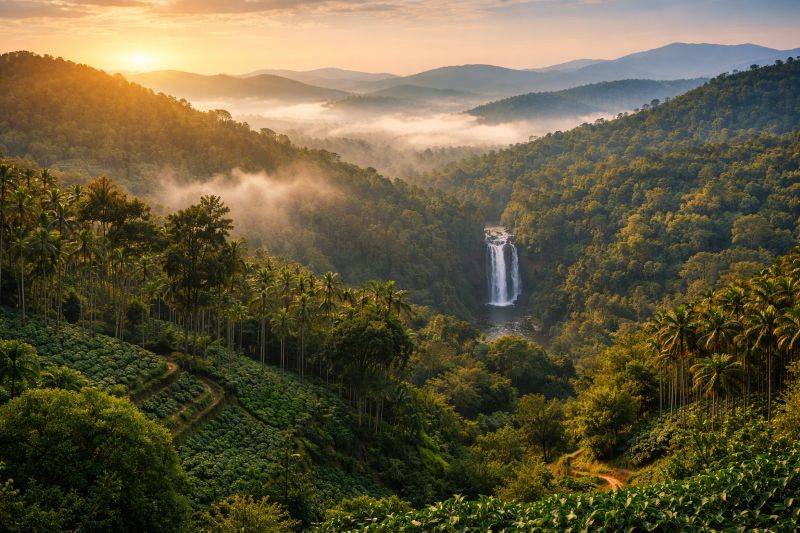
July reveals one of the most atmospheric sides of Coorg. As the southwest monsoon settles over the Western Ghats, the region’s coffee plantations become greener, cooler, mistier, and noticeably more vibrant. Rain gathers on coffee leaves, seasonal streams begin to flow, and the scent of wet earth mixes with the fragrance of trees and spices growing around the estates. For travellers who enjoy nature, plantation scenery, photography, and slower holidays, Coorg’s coffee estates in July offer an experience that is very different from the flowering and harvesting seasons. The month is not only visually beautiful but also important for coffee cultivation, as monsoon moisture supports developing berries, restores soil moisture, and sustains the wider plantation ecosystem.
Coorg’s Coffee Estates in July at a Glance
July is one of Kodagu’s wetter months, so visitors should expect frequent showers, cloudy periods, mist, damp trails, and changing outdoor conditions. These conditions create intensely green plantation views but can also affect road journeys and walking activities. Coffee berries are generally developing at this time rather than being harvested, while the shade trees, pepper vines, ferns, moss, and other companion plants become especially noticeable after repeated rainfall. The Kodagu district administration identifies July and August as months of intense rainfall, making flexibility an essential part of any monsoon visit.
| July feature | What visitors can expect |
| Plantation scenery | Deep greenery, mist, wet leaves and flowing water |
| Coffee growth stage | Green, developing berries rather than ripe cherries |
| Typical conditions | Frequent rain, humidity and cloudy intervals |
| Best experiences | Plantation views, photography, coffee and quiet relaxation |
| Main precautions | Grippy footwear, rain protection and flexible plans |
What Happens to Coorg’s Coffee Estates During the July Monsoon?
Rain changes nearly every visible and sensory element of a coffee estate. Dust disappears from the leaves, the plantation floor becomes softer, and layers of surrounding vegetation grow more rapidly. Water moves through drains, channels, and sloping sections of the estate, while low clouds and mist drift between the taller shade trees. Instead of appearing like a simple agricultural field, a monsoon coffee estate feels like a living, layered landscape where cultivated plants, native vegetation, spices, insects, birds, soil, and water interact.
Coffee Plants Become Greener and More Vibrant: Repeated showers wash dust from coffee leaves and supply moisture to the soil, making the plants appear cleaner and more intensely green. Fresh vegetation also grows around the bushes, filling spaces along paths and between plantation rows. Under cloudy skies, wet leaves reflect soft light and create the glossy appearance often associated with Coorg during the rainy season. This visual transformation is one of the main reasons photographers and nature lovers are drawn to coffee plantations during July.
Developing Coffee Berries Receive Essential Moisture: Coffee flowering and initial fruit setting normally happen before the main July monsoon. The Coffee Board of India lists the usual blossom-shower period as March to April for Arabica and February to March for Robusta, followed by backing showers that help fruit development begin. By July, visitors are more likely to find small green berries growing on the branches than widespread white flowers. Regular monsoon moisture then supports the berries as they continue developing toward the later harvesting season.
The Shade Canopy Becomes Fuller and Denser: Indian coffee is traditionally cultivated beneath a mixed, two-tier shade canopy rather than in fully exposed fields. During July, rain encourages the shade trees and lower vegetation to become thicker, creating a cooler and more enclosed plantation environment. According to the Coffee Board of India, shade trees can help prevent erosion, recycle nutrients, reduce seasonal temperature fluctuations, and provide habitat for diverse plant and animal life. This layered canopy also creates the filtered light, moving mist, and forest-like atmosphere visitors notice during plantation walks.
Wet Soil Creates a Distinctive Monsoon Fragrance: The aroma of a rain-soaked coffee estate is created by more than coffee plants alone. Wet soil, fallen leaves, tree bark, moss, fresh vegetation, and nearby spice crops combine to produce an earthy and refreshing scent. The fragrance may become stronger after a shower or when sunlight briefly warms the damp plantation floor. For many travellers, this natural aroma becomes as memorable as the view because it creates a deeper sensory connection with Coorg’s monsoon landscape.
Streams and Rainwater Channels Return to Life: Coffee plantations in Coorg often occupy sloping land where rainwater naturally travels downhill. During July, small streams, estate drains, and seasonal channels may begin flowing more strongly, adding movement and sound to the landscape. However, large amounts of water also require careful drainage and soil management. Without suitable ground cover and water-control measures, heavy runoff can remove valuable topsoil, damage paths, and create waterlogged sections around the plants.
How July Rain Supports Coffee Cultivation
Monsoon rain is a valuable part of the coffee-growing cycle because it restores moisture after the warmer pre-monsoon months and supports plants carrying developing fruit. The humid environment also contributes to the plantation’s natural microclimate. However, more rainfall is not always automatically beneficial. Growers must manage shade, drainage, weeds, erosion, and plant health carefully because prolonged wetness can create fungal problems or place stress on poorly drained sections of an estate.
Replenishing Moisture in Plantation Soil: Coffee plants require adequately drained soil that retains useful moisture without remaining permanently waterlogged. July rainfall allows plantation soil to absorb and store water, helping the roots support continued plant and berry development. On sloping land, ground cover, contour-based planting, terraces, and soil-binding vegetation can slow runoff and reduce erosion. These measures help keep water within the plantation for longer while protecting the organic matter and nutrients needed for future crops.
Supporting Plants After the Flowering Stage: The arrival of July rain generally follows the earlier flowering and fruit-setting phases of the coffee cycle. At this point, the plants direct energy toward developing the berries attached to their branches. The exact stage varies according to variety, elevation, flowering time, and local rainfall, but visitors should generally expect green, immature fruit. Harvesting comes much later: the Coffee Board of India places the Arabica harvest between November and January and the Robusta harvest between December and February.
Protecting the Estate’s Natural Microclimate: Rain, shade trees, moist soil, and dense vegetation work together to create the cooler, humid conditions found inside a coffee plantation. The canopy reduces direct exposure to harsh sunlight, while fallen organic material helps enrich and protect the plantation floor. Nevertheless, growers may need to regulate excessive shade and improve air movement when prolonged humidity increases disease risks. A carefully managed microclimate supports coffee growth while maintaining the ecological character of the estate.
The Sights, Sounds, and Scents of a July Coffee Estate
A July visit engages more than the eyes. Rain falls first on the taller canopy before filtering down to coffee leaves and the plantation floor, creating several layers of sound. Birds may become more noticeable during quiet intervals between showers, while flowing channels, dripping branches, and moving leaves add to the natural soundscape. Visually, mist softens distant trees, water droplets gather on pepper vines, and moss spreads across shaded surfaces. Together, these details create a calm environment that encourages visitors to slow down and observe.
Mist, Moss, Ferns, and Rain-Washed Leaves: Mist can move rapidly through the plantation, briefly hiding distant trees and creating depth between rows of coffee bushes. Ferns and moss become more prominent around trunks, stones, shaded paths, and damp walls, while wet leaves display deeper shades of green. These features make July particularly rewarding for landscape and close-up photography, although visitors should protect cameras and phones from moisture and avoid stepping off safe paths for a photograph.
Pepper, Cardamom, and Companion Crops: Coorg’s coffee estates often include more than coffee. Pepper vines may climb shade trees, while cardamom, orange, banana, arecanut, and other plants may grow within or around the plantation, depending on the estate. The Coffee Board of India identifies pepper, cardamom, orange, banana, and arecanut among Coorg’s important intercrops. This agricultural diversity adds visual interest and helps visitors understand why a traditional coffee estate can resemble a carefully managed forest garden.
What Can Visitors Experience in July?
A monsoon plantation holiday can include guided walks, coffee tasting, nature observation, photography, quiet reading, and long mornings overlooking rain-washed greenery. A knowledgeable guide can explain the coffee-growing cycle, identify developing berries and companion crops, and show how shade and drainage are managed. Outdoor activities remain dependent on the weather, so travellers should be prepared for shorter walks, changed schedules, or cancellations when trails become unsafe.
The Best Time to Explore the Plantations: There is no guaranteed dry period during July, but early mornings and breaks between showers may provide comfortable opportunities for short plantation walks. Mornings often bring soft light and mist, while post-rain intervals reveal reflective leaves and fresher views. Visitors should check the condition of the path before leaving, carry rain protection, and return to shelter when advised. Evenings are generally better spent in a covered space, enjoying locally prepared coffee and listening to the rain rather than walking on wet trails after dark.
Is July a Good Time to Visit Coorg’s Coffee Estates?
July is an excellent choice for travellers who appreciate monsoon weather, misty landscapes, deep greenery, and quiet plantation surroundings. It is less suitable for those who require clear skies, consistently dry roads, or uninterrupted outdoor sightseeing. Rain may affect viewpoints, waterfalls, walking routes, and travel times, so the ideal July visitor is someone who can keep plans flexible and enjoy the resort or plantation setting even when outdoor activities are delayed.
Benefits and Possible Challenges: The main benefits of visiting in July include dramatic scenery, cooler conditions, vibrant plant life, atmospheric photography, and a slower style of travel. The challenges include slippery ground, muddy footwear, limited visibility, road delays, insects, wet belongings, and possible activity cancellations. Travellers should check official weather information and follow local advice, particularly during periods of intense rainfall, rather than attempting to follow a fixed itinerary regardless of the conditions.
What to Pack for a July Plantation Stay
Pack lightweight rainwear, quick-drying clothes, long trousers, extra socks, an umbrella or poncho, and closed shoes with reliable grip. Electronics and important documents should be stored in waterproof sleeves or sealed bags. Insect repellent, essential medication, a compact towel, a portable charger, and a reusable water bottle can also be useful. Avoid carrying an unnecessarily heavy day bag because uneven and wet plantation paths are easier to manage when both movement and balance are unrestricted.
Essential Monsoon Safety Tips: Use only approved plantation routes and choose guided walks whenever possible. Avoid waterlogged paths, overflowing channels, unstable slopes, and isolated areas during heavy rain. Walk slowly, keep your hands available for balance, and never enter plantation work areas without permission. Families travelling with children, older adults, or guests with limited mobility should ask about slopes, walking distances, barriers, and indoor alternatives before booking an outdoor experience.
Sustainable Coffee-Estate Experiences in Coorg
Responsible plantation tourism involves respecting the estate as both an ecosystem and a working agricultural property. Visitors can help by staying on marked routes, carrying reusable items, taking waste back, avoiding loud behaviour, and not picking coffee berries, flowers, leaves, or spices without permission. Choosing local guides, purchasing responsibly sourced coffee, and learning about the work of growers can also support the community. India’s mixed shade-grown coffee system is closely connected with soil protection and biodiversity, making thoughtful visitor behaviour especially important.
Experience Coorg’s July Rains at Inika Resort
Set within the coffee-plantation landscape of Virajpet, Inika Resort offers a peaceful base from which to experience Coorg’s monsoon atmosphere. Guests can wake to rain-washed greenery, listen to birds and falling water, and enjoy slow moments surrounded by nature without giving up the comfort of a luxury retreat. The resort’s emphasis on elegance, tranquillity, and eco-conscious design suits couples, families, and nature lovers seeking a restorative escape. Seasonal walks or other outdoor experiences should be confirmed directly with the resort because availability may change with rainfall and trail conditions.
Conclusion
Rain transforms Coorg’s coffee estates in July into richly layered landscapes filled with mist, glossy leaves, developing coffee berries, flowing water, earthy fragrances, and the sounds of a living plantation. The season supports the coffee-growing cycle while creating an unforgettable setting for travellers who enjoy nature and slow, meaningful experiences. Although July requires rain-ready packing and flexible plans, it offers an intimate view of Coorg that drier months cannot reproduce. For a comfortable and eco-conscious stay surrounded by the peaceful coffee plantations of Virajpet, Inika Resort provides a natural place to pause, reconnect, and experience the beauty of the monsoon.