
| Coffee Estates, Waterfalls, Wildlife & Everything About South Coorg — 2026 inikaresorts.com | The Definitive South Coorg Travel Guide |
Where Is Virajpet & Why It Matters
Virajpet — officially Virarajendrapete, named after Kodagu’s last independent king — sits at 1,090 metres elevation in the southern heart of Kodagu district. If Madikeri is Coorg’s tourist doorstep, Virajpet is the land beyond it: the part of Coorg where the coffee plantations are not a backdrop to sightseeing but the landscape you actually live inside.
Geographically, Virajpet is the gateway to South Coorg — the part of the district that borders Kerala’s Wayanad, where the Western Ghats forests are densest, where Nagarhole National Park’s south gate opens, where the Brahmagiri range rises, and where the Kaveri’s tributaries begin as springs in the hills. The entire taluk is covered in shade-grown coffee and spice estates, with pepper vines climbing every shade tree and cardamom growing in the understory. This is not a tourism landscape. It is an agricultural landscape that happens to be extraordinarily beautiful.
The town itself is modest — a market, a bus stand, a few banks, fuel stations, and administrative offices. Virajpet is not a destination you walk around. It is a base from which you drive into coffee estates, forest roads, waterfalls, and wildlife territory. The attractions are the landscape, and the landscape is everywhere.
| Location | Virajpet (Virarajendrapete), Kodagu District, Karnataka |
| Elevation | 1,090 m (3,576 ft) |
| Also Known As | Virarajendrapete; South Coorg hub |
| Distance from Madikeri | 47 km (1 hour 10 minutes) |
| Distance from Bangalore | 275 km (5.5–6.5 hours) |
| Distance from Mysore | 130 km (3.5 hours) |
| Distance from Mangalore | 145 km (3.5 hours) |
| Distance from Kannur (Kerala) | 95 km (3 hours) |
| Best Time to Visit | October–February (clear); June–September (monsoon waterfalls) |
| Ideal Duration | 2–3 days |
| Best For | Coffee lovers, couples, wildlife, trekking, photographers, families |
Virajpet vs Madikeri: Understanding the Difference
This is the most common question travelers ask when planning a Coorg trip, and the answer shapes the entire experience.
| Madikeri | Virajpet / South Coorg | |
|---|---|---|
| Character | Compact tourist town | Spread-out plantation landscape |
| Sightseeing | Fort, Raja’s Seat, temples, market | Waterfalls, treks, wildlife, estates |
| Coffee Experience | Nearby estates; town itself is urban | You are inside the coffee belt |
| Crowd Level | High during peak season | Low year-round |
| Best For | First-time visitors, 1-day trips | Immersion, multi-day stays, couples |
| Accommodation | Town hotels, walking distance | Plantation stays, nature-embedded |
| Evening Activity | Market walk, Raja’s Seat fountain | Bonfire, plantation silence, stars |
| Driving Required | Minimal (town is walkable) | Essential (attractions spread 15–50 km) |
The strongest Coorg trip combines both: one day of Madikeri’s sightseeing variety, then two days in South Coorg’s plantation and forest country. The contrast between the two — from tourist energy to estate silence — is what makes a Coorg trip feel like more than a hill-station weekend.
Coffee Plantations: The Heart of Virajpet
Virajpet is not near coffee country. Virajpet IS coffee country. The entire taluk is a continuous carpet of shade-grown Arabica and Robusta under a canopy of silver oak, rosewood, and jackfruit. Pepper vines spiral up every trunk. Cardamom grows in the understory. Oranges hang from mid-canopy branches. This is not monoculture — it is managed forest that produces coffee, and it is the reason Coorg’s hills remain forested while other Indian hill stations have been cleared for tea or agriculture.
The coffee experience changes by season. November through February is harvest — workers move through the rows picking red cherries by hand, processing yards hum with pulping and fermenting, and drying tables spread across every flat surface. March and April bring the blossom — white flowers blanket the estates, filling the air with a jasmine-like fragrance that reaches you before the visual does. The rest of the year is maintenance — pruning, shade management, pest control — the unglamorous work that makes harvest possible.
At plantation stays like INIKA Resorts, coffee is not a day-trip activity. It is the setting. You wake inside the estate, walk through coffee rows before breakfast, drink coffee grown and processed within the same property, and fall asleep to the sound of the canopy. That integration — staying inside the thing you came to see rather than driving to it — is what makes South Coorg’s coffee tourism distinct.
| Coffee Experience | What Happens | Best Season |
|---|---|---|
| Estate morning walk | Walk through coffee rows, shade trees, pepper vines at dawn | Year-round |
| Harvest observation | Watch hand-picking, pulping, fermentation | November–February |
| Coffee blossom | White flowers carpet the estates, jasmine fragrance | March–April |
| Processing tour | See drying yards, roasting, grading | November–March |
| Tasting | Arabica vs Robusta from the same estate | Year-round |
| Buying beans | Single-estate, freshly roasted, incomparable quality | Year-round (freshest Nov–Mar) |
| Pepper harvest | Green pepper from the vine — sharp, citrusy, revelatory | December–February |
What to See and Do Around Virajpet
For detailed attraction-by-attraction guides with entry fees, timings, and photography tips, see 25 Best Places to Visit in Virajpet on our site. Below is the landscape-level overview.
Waterfalls
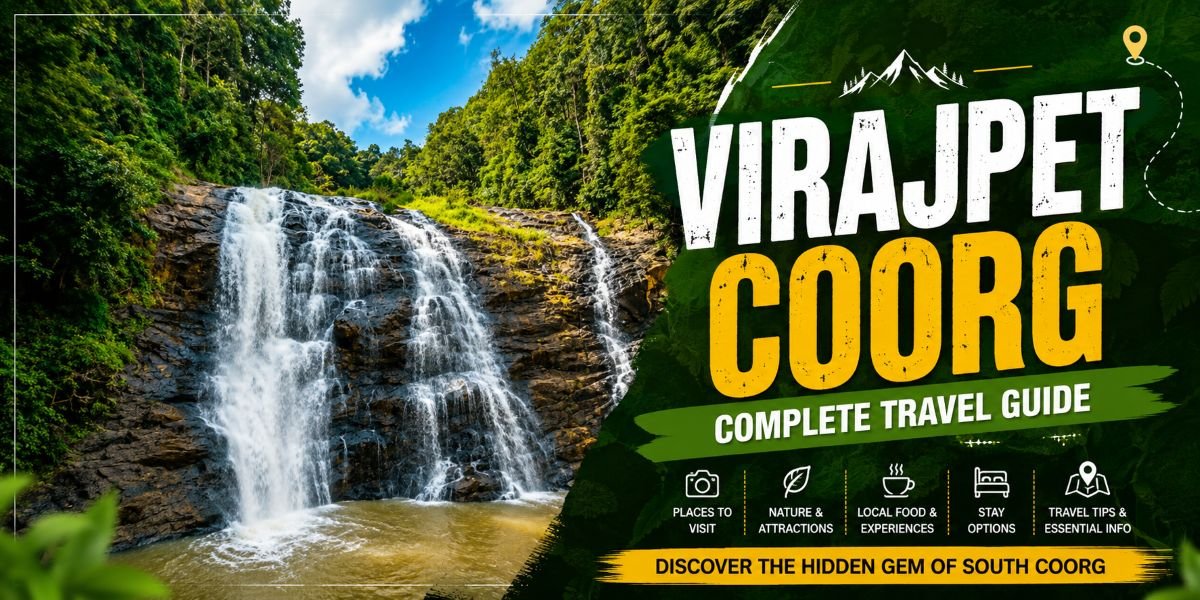
Iruppu Falls is South Coorg’s centrepiece — 170 feet of cascade from the Brahmagiri range, reached via a 20-minute forest walk through the wildlife sanctuary. The Rameshwara Temple at the base adds mythology to the natural spectacle. Entry ₹20–₹50, open 8 AM–5 PM. During monsoon, the volume is staggering. Chelavara Falls (18 km from Virajpet, 12 km from INIKA Resorts) is the quieter alternative — a wide, photogenic cascade with easy access, fewer crowds, and a different visual shape from the vertical drops of Iruppu and Abbey Falls.
Trekking
Tadiandamol (1,748 m) is Coorg’s highest peak and its signature day trek — 6–8 hours round trip from Kakkabe through coffee estates, shola forest, and summit grasslands. The view from the top stretches across the Western Ghats into Kerala. Brahmagiri Trek (1,608 m) is longer, harder, and wilder — dense tropical forest, moss-covered boulders, and endemic bird species. Strictly for experienced trekkers with forest department permits. Both trailheads are 25–30 km from INIKA Resorts.
History & Culture
Nalnad Palace at Kakkabe is a Kodava royal hunting lodge — modest, atmospheric, and set against the Tadiandamol foothills. Naladi Palace Ruins (20 km from Virajpet) are the crumbling remains of another royal residence, with trees growing through stone floors and coffee pressing against what were once royal chambers. Kakkabe Village itself is one of the most culturally intact Kodava settlements in the district — traditional ainmane (ancestral homes), working estates, and a pace of life rooted in land and tradition.
Wildlife & Forest Drives
Nagarhole National Park’s south gate is accessible from the Virajpet–Kutta road — 50 km from Virajpet, 45 km from INIKA. Elephant density is among Asia’s highest, and tiger sightings are possible. The Kabini backwaters in April–May draw massive elephant herds — one of India’s great wildlife spectacles. Brahmagiri Wildlife Sanctuary protects the dense tropical forest around Iruppu Falls. The forest drives between Virajpet, Kutta, and Srimangala — narrow, canopy-covered roads where tree branches meet overhead — are wildlife experiences in themselves. Dawn drives frequently reveal elephants crossing the road, gaur at forest edges, and hornbills overhead.
Kodava Culture & Villages
The villages around Virajpet retain Kodava cultural identity more visibly than anywhere else in the district. The martial traditions (odikathi sword, peechekathi dagger), the Kaveri-worship rituals, the huttari harvest festival (November–December), and a cuisine built on pork, rice, and forest ingredients all persist in daily life. Visiting an ainmane, eating authentic Kodava food at a plantation kitchen, or talking with estate workers during harvest provides cultural depth that no fort or museum can replicate.
| Experience | Distance from INIKA | Time Needed | Difficulty |
|---|---|---|---|
| Iruppu Falls | 30 km (45 min) | 2–3 hours | Moderate (forest walk) |
| Chelavara Falls | 12 km (20 min) | 45 min–1 hour | Easy |
| Tadiandamol Trek | 25 km to trailhead | 6–8 hours | Moderate-Hard |
| Kakkabe + Nalnad Palace | 22 km (35 min) | 1–2 hours | Easy |
| Nagarhole Safari | 45 km (1 hr 10 min) | Half day | Easy (vehicle safari) |
| Forest Drive Loop | Direct from estate | 2–3 hours | Easy (drive) |
| Kabbe Hills Viewpoint | 25 km (40 min) | 1.5 hours | Easy |
| Coffee Plantation Walk | 0 km | 1.5–2 hours | Easy |
Virajpet Food: What to Eat in South Coorg
Kodava cuisine reaches its most authentic form in the homes and plantation kitchens of South Coorg. Pandi curry — pork slow-cooked with kachampuli vinegar and Kodava masala — is the defining dish, and the versions served at plantation stays use pork sourced locally and vinegar aged for months. Kadambuttu (steamed rice balls) are the traditional accompaniment, meant to be broken by hand and dipped into the curry. Koli curry (chicken), bamboo shoot preparations using fresh shoots from estate edges, akki roti (rice flatbread cooked on a flat stone), and noolputtu (Kodava string hoppers) complete the Kodava table.
The coffee deserves its own line. Estate-fresh Coorg coffee — beans grown, processed, and roasted within walking distance of your cup — is so different from commercial coffee that they barely share a name. At INIKA Resorts and similar plantation properties, the morning coffee is produced from the estate itself. That farm-to-cup distance, measured in metres rather than supply chains, changes the flavour profile and the experience of drinking it.
Virajpet town has a few restaurants serving Kodava food — ask locals for the current best options, as they change. Ponnampet’s weekly market is another excellent food destination. But the most reliable and authentic Kodava meals in South Coorg come from plantation kitchens, where the cook, the ingredients, and the tradition are all local.
Best Time to Visit Virajpet
| Season | Weather | Best For | Key Detail |
|---|---|---|---|
| Oct–Nov | Cool, post-monsoon green | All-round best window | Coffee harvest starting; Nagarhole safaris productive |
| Dec–Jan | Cold mornings (10–15°C) | Couples, families | Peak demand; picking and processing in progress |
| Feb–Mar | Mild, warming | Photography, quiet travel | Harvest continues; blossoms start late March |
| Apr–May | Warm, dry | Kabini elephants, budget stays | Waterfalls weaken; Nagarhole backwater spectacle |
| Jun–Jul | Heavy monsoon | Waterfall seekers, rain lovers | Iruppu at full power; forest roads slippery; leeches |
| Aug–Sep | Wet, misty | Photographers, monsoon immersion | Landscape at greenest; flexible plans essential |
The unique advantage of Virajpet over Madikeri is that the plantation landscape is beautiful in every season. Madikeri’s viewpoints need clear skies to deliver. A coffee estate is compelling whether it is drenched in monsoon rain, blanketed in blossom, or busy with harvest workers. The season changes what you do outside the estate, but the estate experience is year-round.
How to Reach Virajpet
Like all of Coorg, Virajpet has no airport or railway station. Every arrival is by road.
| From | Distance | Drive Time | Route Notes |
|---|---|---|---|
| Bangalore | 275 km | 5.5–6.5 hours | NH-275 via Mysore → Kushalnagar → Madikeri → Virajpet; most common approach |
| Mysore | 130 km | 3.5 hours | Via Hunsur and Gonikoppal; scenic Ghat climb |
| Madikeri | 47 km | 1 hour 10 min | SH-88 through plantation country; excellent road |
| Mangalore | 145 km | 3.5 hours | Coastal approach, Ghat climb through forest |
| Kannur (Kerala) | 95 km | 3 hours | Enter South Coorg via Kutta; arrives in plantation country first |
| Calicut (Kerala) | 155 km | 4 hours | Via Wayanad and Kutta; the quietest entry into Coorg |
The Kerala approach (Kannur or Calicut → Kutta → Virajpet) is strategically valuable for travelers combining Wayanad and Coorg. You enter through Coorg’s wildest corner — forest roads, the Nagarhole border, Iruppu Falls territory — and arrive at Virajpet from the plantation side rather than the tourist-town side. It is the approach that best matches what South Coorg actually is.
Within South Coorg, a car is essential. Attractions are spread across 50+ km of plantation and forest roads. Self-driving offers maximum flexibility but requires comfort with narrow roads and potential wildlife crossings. Hiring a car with driver (₹3,000–₹5,000/day) removes the stress.
Where to Stay in Virajpet
Virajpet town has a handful of hotels suitable for transit stops, but no one comes to South Coorg for a town hotel. The reason to stay in this part of Coorg is to stay inside it — inside a working plantation, surrounded by the coffee and forest landscape rather than observing it through a hotel window.
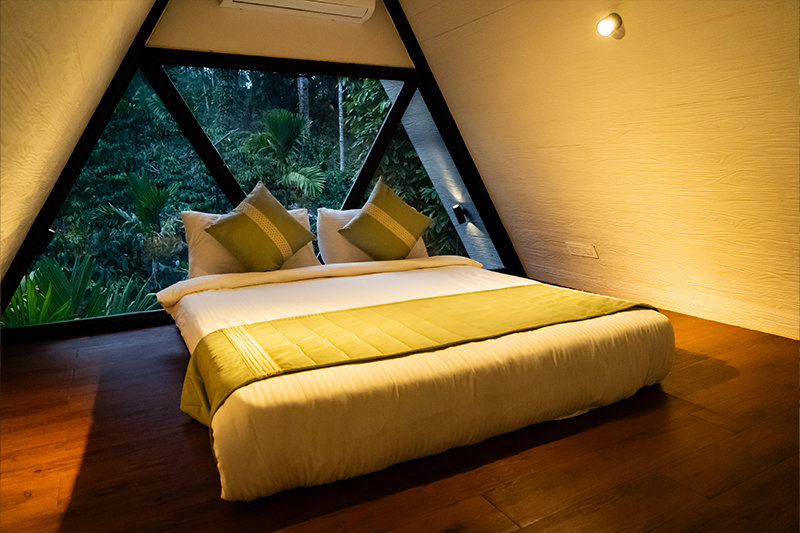
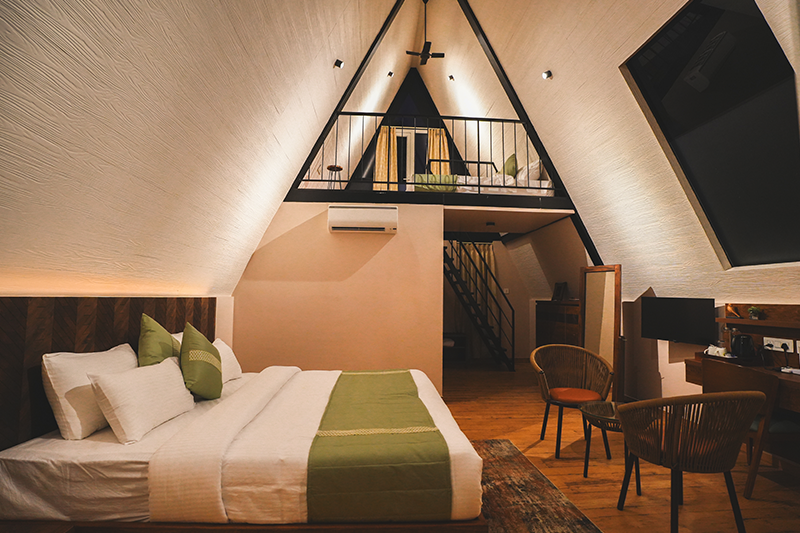
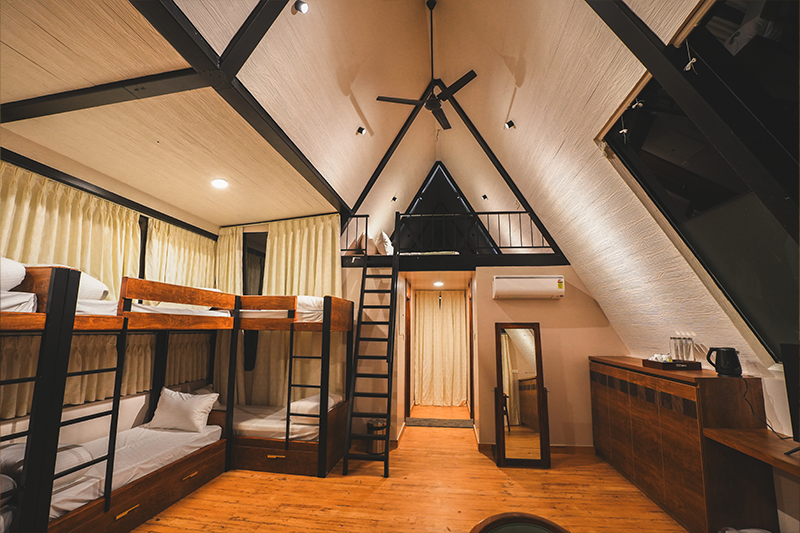
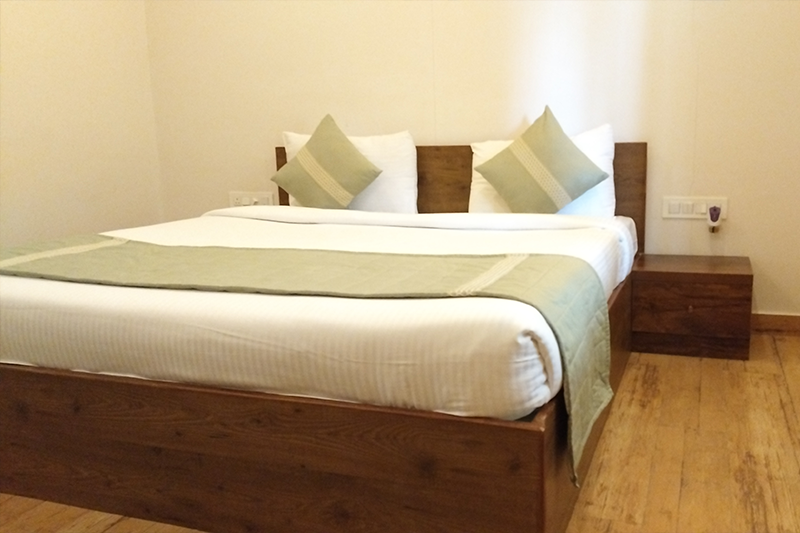
Plantation stays in the Virajpet area range from basic homestays (₹1,500–₹3,000/night) to premium estate properties (₹8,000–₹20,000+/night). The difference is not just comfort but integration — how deeply the estate experience is woven into the stay. INIKA Resorts, set within a working coffee and spice plantation about 15 km from Virajpet town, is positioned centrally for every South Coorg attraction: Chelavara Falls 12 km, Kakkabe 22 km, Iruppu Falls 30 km, Nagarhole south gate 45 km, Kabbe Hills 25 km. The estate itself — morning walks through coffee and pepper, estate-grown coffee at breakfast, private cottages overlooking the canopy, bonfire evenings — is not the base from which you access attractions. It is the primary attraction, with waterfalls and wildlife as day trips.
| Stay Type | Best For | Advantage | Trade-off |
|---|---|---|---|
| Virajpet town hotel | 1-night transit stops | Town amenities, fuel, ATM | No nature experience; urban setting |
| Basic plantation homestay | Budget travelers, backpackers | Affordable, authentic, local hosts | Limited amenities; basic rooms |
| Premium plantation stay | Couples, families, immersion | Estate integration, privacy, cuisine | Higher cost; car needed for everything |
Virajpet Itineraries
1-Day South Coorg Highlight
| Time | Activity | Notes |
|---|---|---|
| 6:30 AM | Plantation walk + breakfast at estate | Coffee rows, pepper vines, birdsong |
| 9:00 AM | Chelavara Falls | 20 min from INIKA; 45 min at falls |
| 10:30 AM | Kakkabe Village + Nalnad Palace | 40 min at palace + village walk |
| 12:30 PM | Lunch — local Kodava food | Virajpet town or plantation kitchen |
| 2:00 PM | Drive to Iruppu Falls | 45 min drive; 2 hours at falls |
| 5:00 PM | Return via forest drive | Wildlife potential at dusk |
| 7:00 PM | Bonfire dinner at estate | End the day in plantation silence |
2-Day South Coorg Itinerary
Day 1: Arrive at plantation stay. Afternoon estate walk — coffee, spice, pepper tour. Evening bonfire. Let the landscape settle in before you start chasing attractions.
Day 2: Early start. Iruppu Falls (arrive by 8:30 AM, 2 hours there). Return via Kutta–Srimangala forest drive (wildlife potential). Afternoon Chelavara Falls or Kakkabe + Nalnad Palace. Sunset from Kabbe Hills or estate viewpoint.
3-Day Deep South Coorg Itinerary
Day 1: Arrive. Plantation walk, spice tour, bonfire evening. No driving.
Day 2: Tadiandamol trek from Kakkabe (full day — depart 6 AM, summit by 10 AM, return by 3 PM). Evening rest.
Day 3: Nagarhole south gate safari (book morning slot, depart 5:30 AM). Return via Kutta. Afternoon Iruppu Falls or Chelavara Falls. Sunset from estate. Departure or extend.
Virajpet for Different Travelers
| Traveler | Best Experiences | Ideal Duration |
|---|---|---|
| Couples | Plantation walks at dawn, Chelavara Falls, Kabbe Hills sunset, private cottage evenings, forest drives | 2–3 days |
| Families | Coffee + spice walk (kids fascinated), Nagarhole safari, Chelavara (easy access), Kakkabe village | 2–3 days |
| Nature lovers | Forest drives, Brahmagiri, birdwatching, hidden trails, river crossings, monsoon immersion | 3–4 days |
| Trekkers | Tadiandamol (day trek), Brahmagiri (experts only), Kotebetta, plantation ridge walks | 2–3 days |
| Photographers | Dawn estate walks (trogons, hornbills), Iruppu monsoon, Tadiandamol summit, forest light | 3–5 days |
| Coffee enthusiasts | Estate walks, harvest observation, processing, tasting, blossom season, buying | 2–3 days |
| Culture seekers | Kodava villages, ainmane visits, traditional food, huttari festival (Nov–Dec), Kakkabe | 2 days |
Practical Virajpet Tips
Essentials
Carry cash — ATMs exist in Virajpet and Ponnampet but not at Kakkabe, Srimangala, Kutta, or any attraction. Download offline Google Maps for the entire South Coorg area; signal drops to zero on forest roads and plantation interior roads. Fill fuel in Virajpet, Ammathi, or Ponnampet before heading to remote areas. Inform your accommodation of your daily plans, especially for treks.
Driving
Drive slowly on forest and plantation roads — elephants have absolute right of way. If you encounter an elephant, switch off the engine and wait silently. Dawn and dusk drives have the highest wildlife potential but also the lowest visibility — keep headlights on even in daytime under heavy canopy. Roads to Mandalpatti, Brahmagiri, and some plantation interiors are unpaved; a regular car manages in dry season but an SUV is safer in monsoon.
Monsoon-Specific
Rain jacket essential (umbrellas useless in wind). Waterproof bags for electronics. Shoes with grip for every surface — even parking areas get slippery. Leech socks mandatory for any forest trail; leeches are aggressive June–October. Check road conditions before driving to Iruppu Falls or Nagarhole — some sections close during heavy rain. The tradeoff is worth it: monsoon Iruppu Falls is one of the most powerful sights in Karnataka.
Common Mistakes in Virajpet
Skipping Virajpet entirely. Most first-time Coorg visitors stay only in Madikeri and leave without experiencing the plantation landscape that made Coorg famous. If you have 2+ days, South Coorg is not optional — it is the main course.
Treating it like Madikeri. There is no walkable town centre, no evening market, no musical fountain. The attractions are the landscape, the drives, the walks, and the silence. If you need conventional sightseeing, spend day one in Madikeri; spend days two and three here.
Underestimating distances. Iruppu Falls is 30 km from INIKA but takes 45 minutes on plantation roads. Nagarhole south gate is 45 km and over an hour. Google Maps underestimates South Coorg drive times by 15–20 minutes consistently. Start early.
Attempting Tadiandamol or Brahmagiri without preparation. These are real treks requiring fitness, water, appropriate footwear, and ideally a local guide. They are not park walks.
Frequently Asked Questions
Is Virajpet worth visiting?
Absolutely — if you came to Coorg for coffee, forests, waterfalls, and quiet rather than forts and viewpoints. Virajpet delivers the Coorg that travel brochures promise but Madikeri alone cannot provide.
How is Virajpet different from Madikeri?
Madikeri is a compact sightseeing town. Virajpet is spread-out plantation country. Madikeri offers variety in a small radius. Virajpet offers immersion across a wider landscape. The best Coorg trip includes both.
How do I get from Madikeri to Virajpet?
Drive SH-88, about 47 km, roughly 1 hour 10 minutes through plantation country. The road is excellent. No public transport that matches the convenience of a car.
Is Virajpet good for families?
Yes — Nagarhole safari, Chelavara Falls (easy access), coffee and spice plantation walks (kids love seeing kitchen spices growing on plants), and the open space of an estate are all family-friendly. Skip Brahmagiri trek and hidden trails with young children.
Where should I stay in Virajpet?
In a plantation property, not in town. The whole point of South Coorg is the estate experience. Properties like INIKA Resorts put you inside a working plantation with all South Coorg attractions within 30–50 km.
Is Virajpet safe?
Very. Kodagu is one of Karnataka’s safest districts. Standard caution for wildlife areas — don’t approach elephants, stay on trails, inform your accommodation of plans. The estate and village environments are extremely safe.
Why Virajpet Is the Coorg That Stays With You
Madikeri gives you photographs. Virajpet gives you memories. The difference is not quality — it is type. A fort photograph, a waterfall photograph, a sunset photograph. These are Madikeri’s gifts, and they are real. But the sound of a coffee estate at 6 AM, the taste of pepper straight from the vine, the moment an elephant crosses the road 50 metres ahead of your car, the silence of a plantation bonfire after everyone has stopped talking — these do not photograph well. They are body-and-sense memories. And they are what bring people back to Coorg.
Virajpet is the Coorg that exists between the tourist stops. The Coorg of working land, of farmers who know every bird by call, of roads where the canopy closes overhead and the light turns green. It is not for every traveler. But for the traveler who wants to know what Coorg actually is — underneath the brochures, beyond the checkpoints, past the selfie spots — South Coorg is the answer. And it starts in Virajpet.
Related Guides
- 25 Best Places to Visit in Virajpet — detailed attraction-by-attraction guide
- Coorg Karnataka Complete Travel Guide — full district overview
- Madikeri Coorg Complete Travel Guide — the Madikeri companion
- Bangalore to Coorg Distance & Travel Guide — route planning
- Best Time to Visit Coorg — month-by-month analysis