

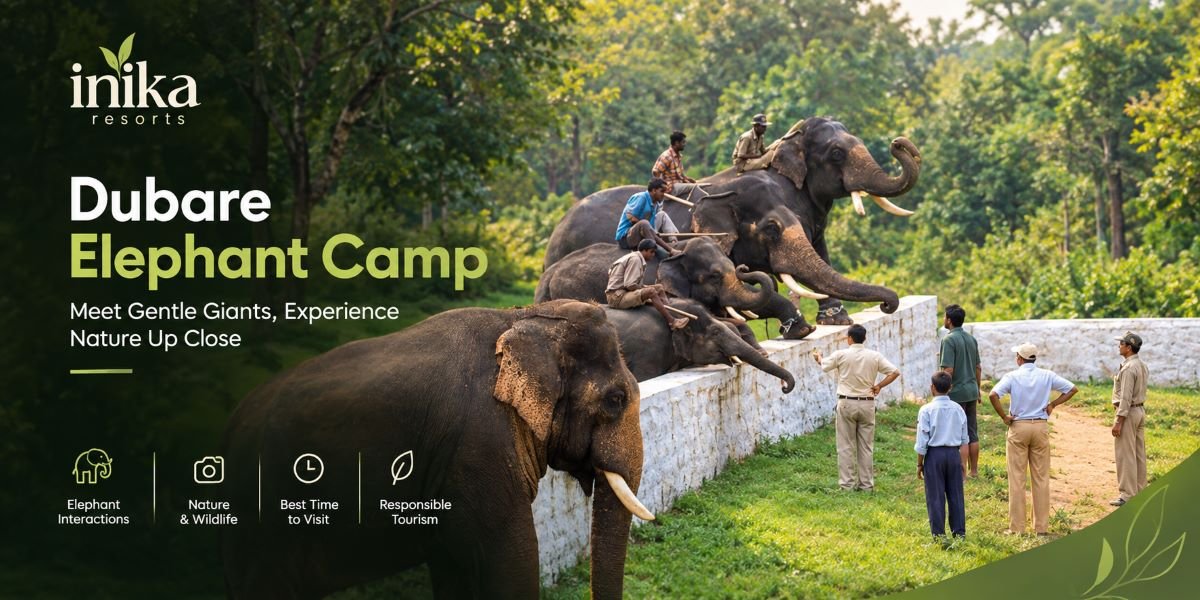
Dubare Elephant Camp: Visitor Guide, Timing, Activities and Responsible Wildlife Tourism
Dubare Elephant Camp is one of the places in Coorg where a sightseeing trip can become a closer look at Karnataka’s long relationship with elephants. Set beside the Cauvery River near Kushalnagar, the camp was historically associated with the training of elephants used for Mysuru Dasara and has since developed into an elephant-focused tourism and learning destination.
But planning a visit to Dubare in 2026 requires a little more care than simply checking an old list of opening hours. The camp’s visitor arrangements have changed following a serious safety incident, and day-visit and elephant-interaction activities are currently subject to closure.
If you are planning a Coorg itinerary that includes Dubare, here is what you need to know about its location, activities, timing, access, seasonal conditions and responsible wildlife tourism.
Is Dubare Elephant Camp Open in 2026?
This is the first thing to check before leaving for Dubare.
As of October 2026, the official Dubare Elephant Camp website states that 3-hour elephant interaction and day-visit activities are temporarily closed until further notice following an incident involving elephants at the river bathing point. The stay option at the camp remains open.
Earlier in 2026, authorities also introduced tighter safety measures following a fatal incident involving elephants at Dubare. These developments mean that older travel blogs listing fixed elephant-bathing sessions, feeding opportunities or day-visit packages may no longer reflect the current situation.
For that reason, do not assume that an advertised morning activity is operating simply because it appears on an older itinerary.
If you are already in Coorg, confirm the current status before driving to the camp specifically for elephant interaction.
Where Is Dubare Elephant Camp?
Dubare is located on the banks of the Cauvery River in Kodagu district, close to Kushalnagar in northern Coorg. It is generally treated as part of the Kushalnagar sightseeing circuit rather than the Madikeri town cluster.
The location works particularly well when combined with other attractions in North Coorg. INIKA Resorts’ guide to the best places to visit in Coorg places Dubare within the Kushalnagar cluster and suggests combining nearby attractions into a practical day itinerary.
The drive itself is part of the experience. Once you move away from the busier town areas, the landscape becomes increasingly green, with plantations, forest patches and rural roads around the Cauvery basin.
How to Reach Dubare Elephant Camp
Most visitors reach Dubare by road from Madikeri, Kushalnagar or other parts of Coorg.
If you are coming from Bengaluru, the journey to Coorg itself generally takes several hours by road, so Dubare is better treated as part of a planned Coorg itinerary rather than an isolated quick stop.
For travelers planning the entire journey from the city, INIKA Resorts’ Bangalore to Coorg distance and travel guide can help with the broader road-trip planning, including approximate driving distance and preparation tips.
Access to the camp traditionally involves crossing the Cauvery, with boat transport used depending on water conditions and the operating arrangements at the time of your visit. River levels can change significantly between seasons, so access should not be assumed to be identical throughout the year.
Dubare Elephant Camp Timings
Current 2026 visitor status
There is an important distinction between usual operating timings and current availability.
The official camp currently says that its three-hour elephant interaction and day-visit activities are temporarily closed until further notice. Therefore, there is no responsible way to present the old morning and evening activity schedules as guaranteed visitor timings today.
Historically, visitor programmes have commonly been organised around a morning elephant interaction and a shorter later session. Older information frequently mentions morning reporting around 8:30 AM and an afternoon/evening viewing period.
Those timings should be treated as historical reference only, not as confirmation that the activities are operating now.
Before travelling, check the official Dubare/Jungle Lodges information for the latest reopening notice, activity availability and visitor instructions.
What Can You Do at Dubare Elephant Camp?
When visitor activities are operating, Dubare’s main attraction is the opportunity to learn about elephants rather than simply photograph them.
Elephant bathing and grooming
One of the camp’s best-known experiences has traditionally been elephant bathing in the Cauvery.
Visitors have previously been allowed to watch or participate in parts of the grooming process under supervision. However, this is precisely the type of close interaction that should only take place when officially permitted and under current safety protocols.
Do not attempt to approach an elephant independently if interaction activities are unavailable.
Elephant feeding
Feeding has also traditionally been part of the visitor experience. Visitors may have the opportunity to see how elephants are prepared for feeding and learn about the food provided to them.
Again, feeding should only happen when authorised by camp staff. Bringing your own food or attempting to feed an elephant outside an organised programme is inappropriate and potentially dangerous.
Learn about elephant behaviour
For wildlife-minded travelers, this can be more valuable than getting a close photograph.
The camp has historically provided opportunities to learn about elephant behaviour, biology, history and their role in Karnataka’s forestry and cultural traditions.
Pay attention to the naturalist or staff explanations. Understanding why an elephant behaves differently in different situations makes the visit more meaningful than simply ticking an attraction off a Coorg checklist.
River and nature experiences
The Cauvery is an important part of Dubare’s setting. Depending on season, water conditions and officially available activities, visitors may encounter river-based experiences around the camp.
Adventure activities such as rafting have traditionally been associated with the area, particularly during suitable monsoon conditions. However, river activities are highly dependent on water levels, weather and local safety decisions.
Never treat a previously advertised rafting schedule as guaranteed.
What Is the Best Time to Visit Dubare?
For sightseeing in Coorg, the most comfortable period is generally during the cooler months, while the monsoon brings a much greener landscape but also more unpredictable conditions.
If you are interested in broader seasonal planning, INIKA Resorts’ Coorg temperature month-by-month guide provides a useful overview of how weather changes through the year.
October to February
These months generally offer comfortable conditions for road travel and outdoor sightseeing. Mornings can be cool, and popular attractions can become busier during holidays and weekends.
March to May
The weather becomes warmer, particularly during the middle of the day. Starting sightseeing early is useful, especially if you are combining Dubare with several other places.
June to September
The monsoon transforms Coorg’s landscape into a much greener environment. However, heavy rain can affect roads, river conditions and outdoor activities.
If you visit during the rainy season, carry waterproof footwear and protection for phones and cameras.
How Long Should You Spend at Dubare?
Under normal operating conditions, travelers often allocate around two to three hours for the main Dubare experience.
However, the actual time depends on what activities are available on the day, waiting times, river conditions and whether you are combining the camp with other attractions.
It makes sense to avoid packing too many distant attractions into the same day. Dubare works particularly well as part of a Kushalnagar-focused itinerary.
If you are building a larger Coorg trip, INIKA Resorts’ one-day Madikeri sightseeing guide can help you understand how early starts and travel time affect a full day’s schedule.
Responsible Wildlife Tourism at Dubare
A responsible visit begins with understanding that elephants are not domestic entertainment props. They are large, powerful animals with complex behaviour, and even familiar animals can react unpredictably.
Follow the current safety rules
If authorities introduce distance requirements, restricted areas or changes to elephant interaction, follow them without exception.
Do not cross barriers for photographs.
Do not attempt to touch an elephant unless staff specifically permit it.
Do not call, shout at or provoke an elephant to make it look toward your camera.
Never feed animals independently
Only feed elephants when an official programme specifically permits it. Do not offer snacks, fruit or other food from your own bag.
Give elephants space
A good wildlife photograph does not require getting dangerously close.
Use a camera’s zoom rather than physically moving closer. Avoid flash photography if staff advise against it, and keep your voice low around animals.
Respect the river environment
Do not throw plastic bottles, food wrappers or other waste into the Cauvery. Carry reusable water bottles where practical and take personal waste back with you.
Responsible tourism is particularly important in river and forest environments because small amounts of litter can quickly become an environmental problem.
What Should You Carry?
For a normal Coorg sightseeing day involving Dubare, keep your packing simple:
- Comfortable walking shoes
- Drinking water
- Sunscreen and sunglasses
- A light rain jacket during the wet season
- Waterproof protection for phones and cameras
- Small amounts of cash
- Insect repellent
- A light jacket for cooler mornings
- Binoculars if you enjoy nature observation
Avoid carrying unnecessary food around elephants.
If you are staying in the Virajpet area, you can also plan your sightseeing around a quieter base. INIKA Resorts is located in Kuttandi, Virajpet, within a coffee-estate setting, and its luxury cottages in Coorg provide an option for travelers who want to return to a peaceful accommodation environment after a day of sightseeing.
Can Dubare Be a Day Trip From Virajpet?
Yes, Dubare can be included in a broader Coorg sightseeing plan from the Virajpet side, but travel time should be considered carefully.
INIKA Resorts’ Virajpet travel guide discusses Dubare as one of the attractions that can be incorporated into a stay in this part of Coorg.
Rather than rushing from one attraction to another, consider grouping places geographically. A Dubare-focused day can include other nearby North Coorg attractions, while another day can be reserved for Madikeri or South Coorg.
This approach reduces unnecessary driving and gives you more time at each destination.
Food and Refreshments
Because sightseeing schedules can change, it is sensible to carry water and a small amount of emergency cash rather than depending entirely on a particular food outlet being open.
If you are staying at INIKA Resorts, you can also plan meals around the resort rather than trying to fit every meal into your sightseeing route. The resort’s dining page provides information about its multi-cuisine restaurant and other dining spaces.
This can be particularly convenient after a long day on Coorg’s roads.
A Better Way to Plan Your Dubare Visit
The most important lesson for visiting Dubare in 2026 is simple: check current operating conditions before travelling.
Do not rely solely on an old blog’s timing, an outdated social-media post or a travel itinerary published several years ago. Elephant interaction and day-visit arrangements can change because of safety requirements, river conditions and wildlife-management decisions.
If the camp is open for the experience you want, arrive prepared, follow staff instructions and treat the elephants as wildlife rather than attractions designed for unrestricted interaction.
If day visits remain closed when you travel, you can still build a rewarding Coorg itinerary around Madikeri, Kushalnagar, plantations, viewpoints, waterfalls and cultural attractions.
Final Thoughts
Dubare Elephant Camp offers something different from a standard Coorg sightseeing stop. Its appeal comes from the chance to understand elephants, their history in Karnataka and the relationship between wildlife, people and the landscape around the Cauvery.
But the experience should always come second to animal and visitor safety. In 2026, that means checking the camp’s latest operating notice before making the journey, rather than assuming that older elephant-bathing or feeding schedules are still available.
For travelers staying in Coorg, Dubare can fit naturally into a wider itinerary, particularly around Kushalnagar and North Coorg. With the right planning—and a respectful approach to wildlife—it can be a meaningful part of a trip rather than simply another photograph on the itinerary.