






Coorg, also known as Kodagu, is often celebrated for its misty hills, dense forests, waterfalls, and peaceful luxury stays. But beyond its scenic beauty lies a rich agricultural legacy that shaped the region’s identity for centuries — coffee cultivation. Today, Coorg is one of India’s most respected coffee-growing destinations, producing premium beans that are appreciated by coffee lovers around the world.
The journey of Coorg’s coffee industry is deeply connected to colonial history, local farming traditions, changing global markets, and generations of hardworking plantation families. From small experimental plantations introduced during British rule to internationally recognized specialty coffee production, the story of Coorg coffee is both fascinating and inspiring.
For travelers visiting Coorg today, coffee is not just a beverage. It is an experience woven into the landscape, culture, hospitality, and lifestyle of the region. Many visitors choose plantation-style stays such as Inika Resorts to enjoy the true essence of Coorg, surrounded by lush greenery, peaceful nature, and the rich aroma of freshly grown coffee.
How Coffee First Arrived in India
Before understanding Coorg’s coffee industry, it is important to know how coffee reached India.
According to popular historical accounts, coffee was introduced to India in the 17th century by Baba Budan, a Sufi saint who brought coffee beans from Yemen and planted them in the hills of Karnataka. Over time, coffee cultivation slowly expanded across the Western Ghats due to the region’s ideal climate and fertile soil.
However, commercial coffee farming did not truly develop until the British colonial period.
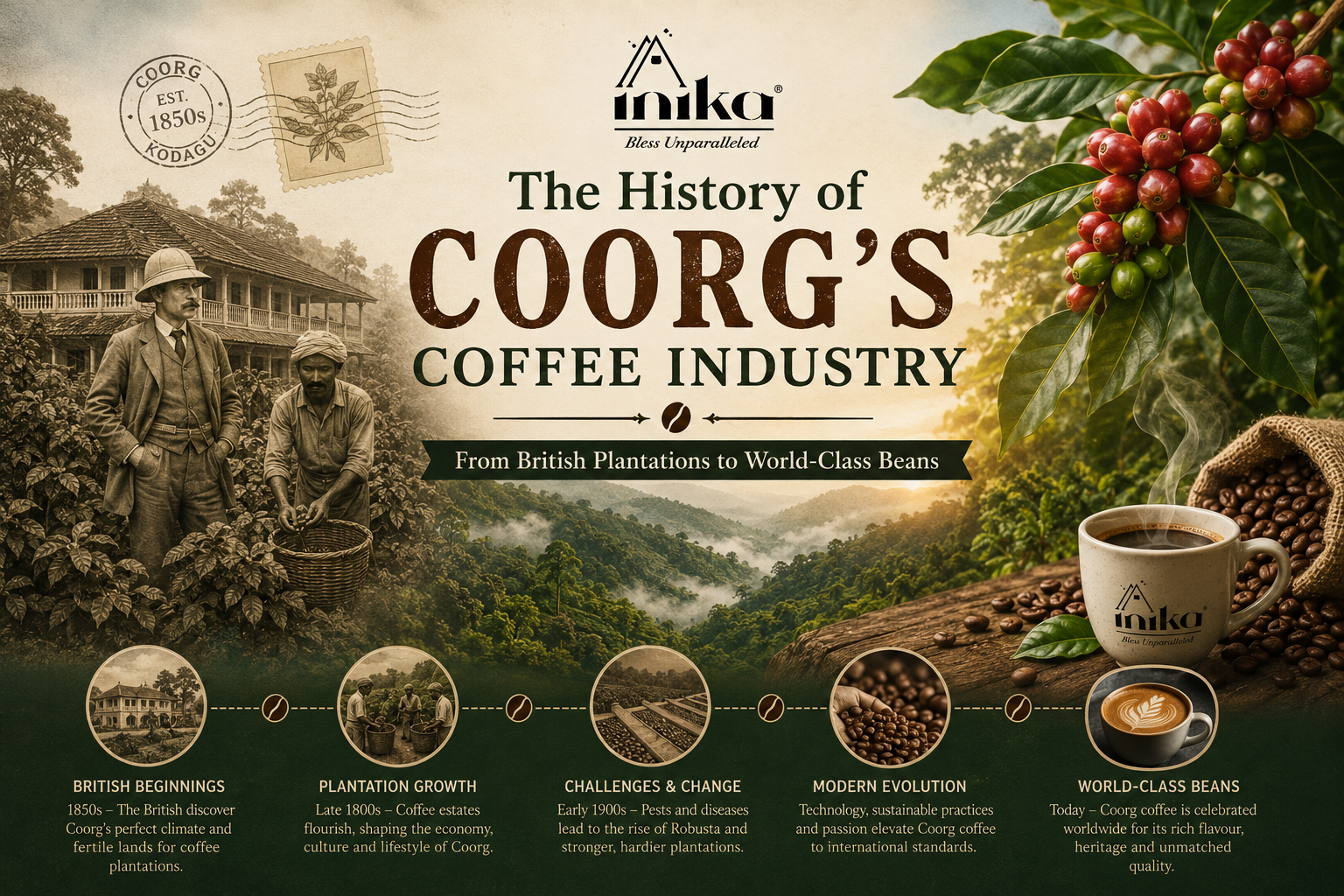
The British Discovery of Coorg’s Coffee Potential
Why the British Chose Coorg
During the 19th century, British officials and plantation owners recognized that Coorg’s geography was perfect for coffee cultivation. The region offered:
- High-altitude hills
- Cool temperatures
- Heavy rainfall
- Rich forest soil
- Natural shade from large trees
These conditions created an ideal environment for growing high-quality Arabica coffee.
The British began clearing forest areas to establish plantations across Coorg. What started as small agricultural experiments soon became a booming plantation economy.
Early Plantation Development
By the mid-1800s, several British settlers had established coffee estates in areas around Madikeri, Virajpet, and Somwarpet. Large plantation houses, processing units, and labor settlements became part of the region’s landscape.
Coffee cultivation transformed Coorg economically. Roads and transport systems improved because coffee needed to be moved efficiently to ports for export.
The plantation culture introduced during this era still influences Coorg’s architecture, food habits, hospitality style, and estate lifestyle today.
The Growth of Arabica Coffee in Coorg
Arabica Became the Dominant Crop
Initially, most plantations in Coorg focused on Arabica coffee because of its superior flavor profile and international demand.
Arabica coffee from Coorg became known for:
- Mild acidity
- Smooth body
- Floral aroma
- Balanced taste
- Pleasant sweetness
European markets especially appreciated Indian Arabica beans because they offered unique flavor characteristics compared to coffee grown in Africa or South America.
Challenges Faced by Early Planters
Coffee cultivation in Coorg was not always easy. Plantation owners faced multiple challenges, including:
- Heavy monsoon damage
- Wildlife threats
- Difficult transportation
- Labor shortages
- Plant diseases
One of the biggest crises came with the spread of coffee leaf rust disease during the late 19th century. Many Arabica plantations suffered major losses.
This forced planters to rethink cultivation methods and diversify coffee varieties.
The Shift from Arabica to Robusta
Why Robusta Became Important
After repeated disease outbreaks damaged Arabica plantations, many growers in Coorg began shifting toward Robusta coffee during the early 20th century.
Robusta plants were:
- More disease-resistant
- Easier to maintain
- Better suited for lower elevations
- Higher yielding
Although Robusta was once considered lower in quality compared to Arabica, Coorg’s climate helped produce Robusta beans with exceptional depth and strength.
Today, Coorg grows both Arabica and Robusta coffee successfully.
A Balanced Coffee Region
Modern Coorg plantations often cultivate:
- Arabica coffee
- Robusta coffee
- Pepper
- Cardamom
- Vanilla
- Arecanut
This mixed plantation approach improves sustainability and supports biodiversity.
Coffee and the Culture of Coorg
Plantation Life Became a Way of Living
Coffee cultivation influenced nearly every aspect of life in Coorg.
Plantation homes developed their own traditions, including:
- Estate hospitality
- Traditional Kodava cuisine
- Community celebrations
- Plantation festivals
- Outdoor lifestyles
Even today, many travelers visiting Coorg enjoy staying inside coffee estates because it offers a peaceful and authentic experience connected to nature.
Luxury resorts and plantation stays across Coorg often incorporate coffee experiences into their hospitality offerings, including plantation walks, coffee tasting sessions, and estate dining.
Coffee and Local Employment
The coffee industry also created employment opportunities for thousands of workers across generations. Plantation labor became central to the rural economy of Coorg.
Families involved in coffee farming developed deep agricultural knowledge over decades, helping improve cultivation practices and bean quality.
Modernization of Coorg’s Coffee Industry
Technological Improvements
As the global coffee market evolved, Coorg’s coffee industry modernized significantly.
Plantation owners adopted:
- Better irrigation systems
- Scientific farming techniques
- Advanced processing methods
- Sustainable cultivation practices
- Improved drying and storage facilities
These improvements helped Coorg compete in international coffee markets more effectively.
Rise of Specialty Coffee
In recent years, Coorg has become an important part of India’s specialty coffee movement.
Specialty coffee focuses on:
- Bean traceability
- Sustainable farming
- Unique flavor profiles
- Small-batch roasting
- Ethical sourcing
Coffee estates in Coorg now produce beans that are used by premium cafés and roasters across India and abroad.
Many specialty roasters value Coorg coffee because the region produces beans with complex flavor notes such as:
- Chocolate
- Spice
- Citrus
- Nuts
- Caramel
- Earthy sweetness
Why Coorg Coffee Is Famous Worldwide
Ideal Growing Conditions
Coorg’s natural environment gives its coffee a distinct identity.
Important factors include:
Altitude
Higher elevations help beans develop slowly, improving flavor complexity.
Shade-Grown Cultivation
Most coffee in Coorg is grown under natural forest shade. This improves bean quality and supports biodiversity.
Monsoon Influence
The region’s heavy rains and cool climate contribute to the unique taste profile of Coorg coffee.
Monsooned Coffee from India
India is also famous for “Monsooned Malabar” coffee, a unique processing style where beans are exposed to moist monsoon winds. While this style is linked to multiple coastal regions, coffee from Karnataka — including Coorg — contributes significantly to its production.
This process creates coffee with:
- Low acidity
- Heavy body
- Earthy flavor
- Smooth texture
It remains highly popular in European markets.
Coffee Tourism in Coorg
Plantation Tourism Is Growing Rapidly
Today, coffee is a major part of Coorg’s tourism industry.
Visitors enjoy activities such as:
- Coffee estate walks
- Plantation stays
- Coffee tasting experiences
- Learning about bean processing
- Nature photography
- Traditional plantation dining
This combination of nature, culture, and coffee makes Coorg different from ordinary hill destinations.
Why Travelers Love Coffee Estate Stays
Staying inside a coffee plantation offers a calm and immersive experience. Guests wake up to mist-covered hills, the aroma of fresh coffee, bird sounds, and peaceful greenery.
Luxury nature resorts in Coorg attract travelers looking for relaxation, privacy, and authentic local experiences connected to the plantation lifestyle.
Sustainability and the Future of Coorg Coffee
Eco-Friendly Farming Practices
Many modern coffee estates in Coorg are focusing on sustainable agriculture.
Popular eco-friendly practices include:
- Organic farming
- Rainwater harvesting
- Reduced chemical use
- Wildlife conservation
- Soil protection
- Shade-tree preservation
These practices help maintain the ecological balance of the Western Ghats.
Challenges Facing the Industry Today
Despite its success, Coorg’s coffee industry faces modern challenges such as:
- Climate change
- Unpredictable rainfall
- Rising labor costs
- Market price fluctuations
- Pest management issues
However, many plantation owners are adapting through innovation, sustainable farming, and direct-to-consumer coffee businesses.
How Coffee Shapes the Identity of Coorg Today
Coffee is more than an agricultural product in Coorg. It defines the region’s atmosphere, economy, culture, and travel experience.
From British-era plantation history to globally admired specialty coffee production, Coorg has built a strong reputation as one of India’s finest coffee-growing regions.
For visitors, exploring Coorg often means discovering the charm of plantation life — walking through coffee estates, learning about bean cultivation, and enjoying fresh local coffee surrounded by nature.
The story of Coorg coffee continues to evolve, blending tradition with modern craftsmanship while preserving the region’s deep connection to the land.
FAQs About Coorg’s Coffee Industry
When did coffee cultivation begin in Coorg?
Commercial coffee cultivation in Coorg expanded during the 19th century under British colonial rule, although coffee first arrived in India much earlier through Baba Budan.
Which type of coffee is mainly grown in Coorg?
Coorg grows both Arabica and Robusta coffee. Arabica is known for its smooth flavor, while Robusta offers stronger taste and higher caffeine content.
Why is Coorg coffee considered special?
Coorg coffee benefits from ideal climate conditions, shade-grown cultivation, rich soil, and monsoon weather, which together create unique flavor profiles.
Can tourists visit coffee plantations in Coorg?
Yes, many plantations and resorts in Coorg offer coffee estate tours, plantation walks, tasting sessions, and immersive plantation stays.
What is shade-grown coffee?
Shade-grown coffee is cultivated under natural tree cover instead of direct sunlight. This method improves biodiversity, protects soil quality, and enhances flavor development.
Is coffee tourism popular in Coorg?
Yes, coffee tourism has become one of the most popular experiences in Coorg, especially among nature lovers, couples, and luxury travelers.
What challenges does the coffee industry face in Coorg today?
Major challenges include climate change, fluctuating coffee prices, labor shortages, and changing rainfall patterns.
Which season is best for visiting coffee plantations in Coorg?
The post-monsoon and winter months, especially from October to March, are ideal for experiencing Coorg’s lush coffee estates and pleasant weather.
Planning a family vacation in Coorg becomes easier when you stay at INIKA Resorts, a peaceful retreat surrounded by nature and scenic beauty. Before your trip, you can check the latest weather conditions through the Coorg Weather Guide and learn about the ideal season to visit with your loved ones in this detailed guide on Best Time and Weather to Visit Coorg Madikeri with Family. During your stay, explore the region’s most popular attractions through Top 5 Places to Visit in Coorg with Family and discover even more incredible destinations in this comprehensive list of 21 Best Places to Visit in Coorg Madikeri. With its central location and tranquil plantation surroundings, INIKA Resorts serves as the perfect base for experiencing Coorg’s natural beauty, family-friendly attractions, and unforgettable travel experiences.